
Elections 2023
VIP Forms Alliance With NDP Lorna Smith – Government To Be Sworn In Today


The Virgin Islands Party (VIP) and the National Democratic Party (NDP) Territorial-At-Large elected member Lorna Smith will form the new government.
Governor John Rankin today, April 25, received a letter supporting the appointment of Dr. Natalio D. Wheatley as Premier and for him to form the Government of the Virgin Islands in accordance with Section 52 of the VI Constitution Order, 2007.
In accordance with Section 52 of the Virgin Islands Constitution Order the Governor will swear in Dr. Natalio D. Wheatley as Premier, and his Ministers, at 6.30 p.m. at Government House.
The VIP won six seats, just one short of having a majority in the Fifth House of Assembly. Following negotiations, Smith formed an alliance with the incumbent party.
VIP seats were secured by Karl Dawson in the First Electoral District, Luce Hodge-Smith in the Fourth Electoral District, Kye Rhymer in the Fifth Electoral District, Chairman Natalio Wheatley in the Seventh Electoral District and Vincent Wheatley in Ninth Electoral District. Sharie De Castro won one of the four Territorial-At-Large.
NDP won three seats – Myron Walwyn in the Sixth Electoral District and Marlon Penn in the Eight Electoral District. Lorna Smith won one the four Territorial-At Large seats.
PVIM secured three seats – Mitch Turnbull returned as Second Electoral District Representative and Skelton and Stacey ‘Buddha’ Mather won two of the four Territorial-At-Large seats.
PU Chairman Julian Fraser was re-elected as the Third Electoral District Representative.
A total of 42 candidates contested the April 24 polls. Advance Polling was on April 20.










Elections 2023
Virgin Islands Elections Office Moves to Expand Access Through Mobile and Absentee Voting

The Office of the Supervisor of Elections announced that the proposed Elections (Amendment) Bill, 2025 would expand access to voting by allowing election teams to visit specified locations so qualified and approved individuals can cast their ballots without attending a polling station in person.
According to the Bill, election officers would be authorised to operate mobile polling stations in hospitals, care facilities, prisons and private residences for voters unable to travel due to illness, disability or other qualifying reasons. Teams could also visit designated public locations ahead of polling day to serve approved absentee voters.
The proposed legislation sets out absentee and postal voting procedures, including application requirements and deadlines for voters who are overseas, medically unable to leave home, caring for dependents or on short-term remand. It also provides for emergency absentee voting in situations such as last-minute medical issues or work obligations.
The Bill further introduces terms such as “absentee voter,” “assistive voting technology,” and “curbside voting,” and would formally establish a Department of Elections responsible for voter registration, public education and the conduct of elections. It also proposes an Elections Advisory Committee to advise on electoral policy and operations.
If passed, the measure would represent one of the most significant updates to the Virgin Islands’ election laws in more than a decade, aiming to make voting more accessible while maintaining the established legal framework.

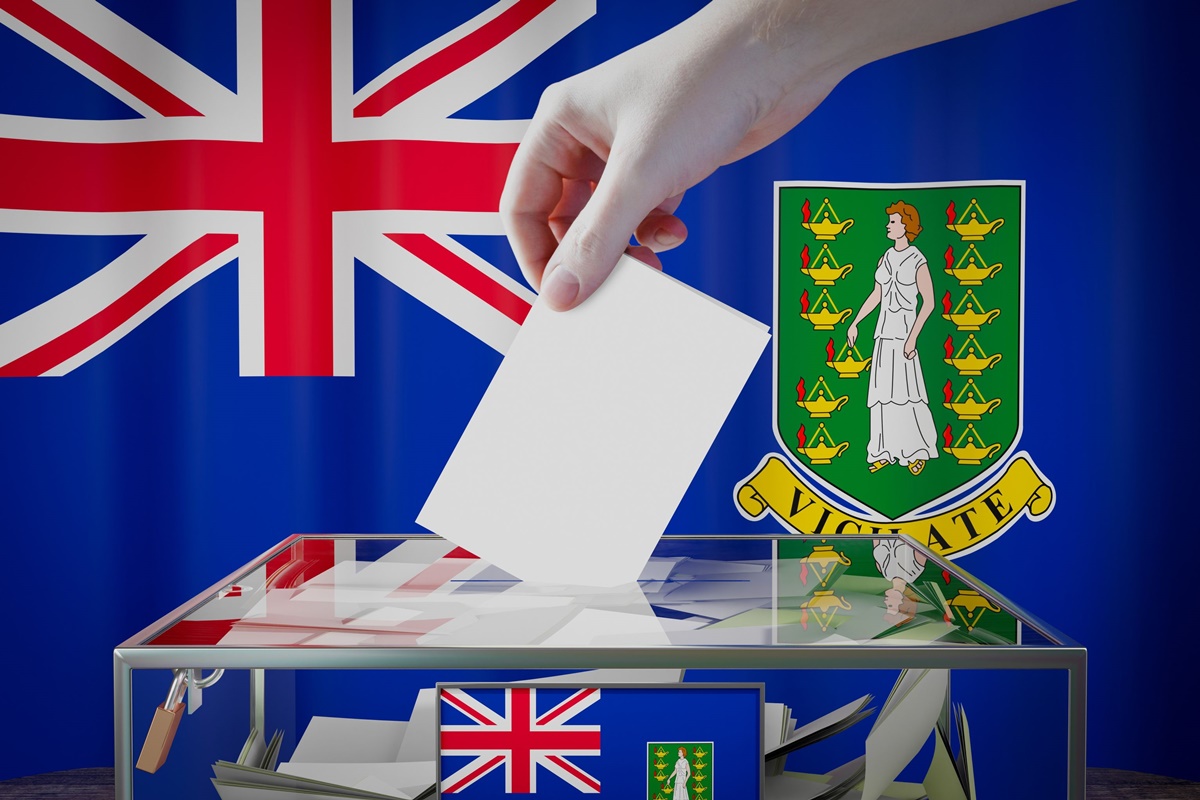
The Elections (Amendment) Bill, 2025, introduces sweeping changes to the Territory’s electoral process, including expanded vote-by-mail provisions, the creation of a Department of Elections, stricter proof-of-residence requirements, and the establishment of an Elections Advisory Committee.
The Bill, now before the House of Assembly, establishes a Department of Elections under the administration of the Supervisor of Elections. The Department will oversee continuous voter registration, revisions to the voters’ roll, candidate nominations, voter education, and the conduct and monitoring of elections. It will also support the Electoral District Boundaries Commission, settle certain electoral disputes prior to results being declared, and incorporate technology to improve transparency and accountability.
The legislation expands voting access through new provisions for absentee, postal, curbside, and mobile voting. Students, government employees, and residents working or receiving medical care abroad may qualify to vote by mail. Elderly and disabled voters unable to enter polling stations may cast ballots from their vehicles, while mobile polling teams will be permitted to visit hospitals, aged-care facilities, prisons, and private homes. An internet-based tracking system will allow voters to monitor the status of their absentee ballots.
Stricter residency verification rules are also introduced. Applicants for voter registration must provide two months of utility bills, rent receipts, or insurance documents as proof of residence. Where this is not possible, a notarized letter or a signed form from the homeowner or principal occupier may be accepted. Submitting false documents carries a fine of up to $500.
The Bill also requires relatives of registered voters who die overseas to notify the Supervisor of Elections with supporting documents, including a death certificate and proof of relationship. False reporting may result in a fine of up to $2,000 or imprisonment for two years.
An Elections Advisory Committee will be created to advise the Supervisor of Elections on policy and operations. Members will be appointed by the Governor after a public application process and in consultation with the Premier, Leader of the Opposition, and the Attorney General. The Committee will include a chairperson, four to six members, and the Supervisor of Elections as an ex-officio member. Individuals currently serving as legislators, public officers, judges, or political party executives will not be eligible.
The Elections (Amendment) Bill, 2025, also updates terminology by replacing “electronic tabulating system” with “electronic voting system” throughout the principal law. It provides for live-streaming of absentee ballot processing and requires recordkeeping, reporting, and safeguards for the handling of ballots before and after polling day.
If enacted, the Bill will amend the Elections Act, Revised Laws of the Virgin Islands 2013, with provisions coming into force on dates to be appointed by the Governor.

The Office of the Supervisor of Elections has published the 2025 Preliminary Voters List, giving registered voters in the Virgin Islands the opportunity to review their information and submit corrections before the final Revised Voters List is issued.
Officials said the publication of the preliminary list is a standard step in the election process and ensures that eligible voters are able to verify their details in advance of the next general election. Registered voters are encouraged to check their names, addresses, and other information and to report any inaccuracies promptly.
Corrections may be submitted through the Office of the Deputy Governor, located on the second floor of the Burhym Building in Road Town, Tortola, or directly to the Office of the Supervisor of Elections at 216 Upper Main Street, Creque Building, Road Town.
The Supervisor of Elections’ office is open Monday to Friday from 8:30 a.m. to 4:30 p.m. Voters may also contact the office by telephone at (284) 468-4380, by fax at (284) 468-2779, or by email at electionsvi@gov.vg.
The Office of the Deputy Governor may be reached at (284) 468-2195 or by email at dgo@gov.vg.
The Revised Voters List will be compiled following the correction period.
Visit https://gov.vg/service-details/2025-preliminary-voters-list to view the list and submit any claims or objections.

Governor’s Office Delivers Trauma Risk Management Training to Frontline Officers in Virgin Islands

Maya Marcellin Departs for Teen Universe International Pageant in Nicaragua

Andrea Wilson brings Caribbean colour to the NYFW debut