
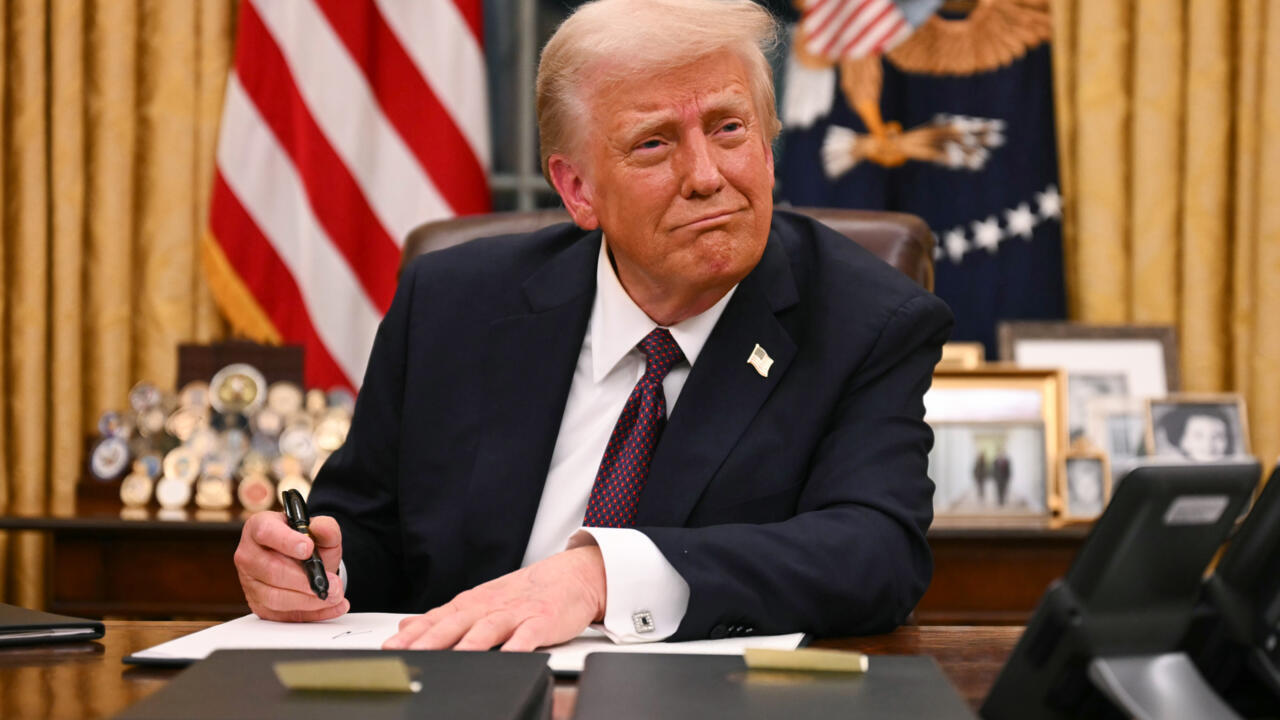
President Donald Trump has ordered the deployment of U.S. naval and military assets to the Caribbean to intensify operations against drug-trafficking networks, prompting a range of reactions from Caribbean and Latin American leaders.
The deployment, which includes the aircraft carrier USS Gerald R. Ford and accompanying warships and aircraft, has been described by the Pentagon as an effort to “detect, monitor and disrupt illicit actors and activities” in the region.
In Caracas, President Nicolás Maduro condemned the move as “an act of aggression” and placed Venezuela’s armed forces on high alert. In Port-of-Spain, Trinidad and Tobago Prime Minister Kamla Persad-Bissessar expressed support for U.S. operations, calling the recent strike on a suspected drug vessel “necessary to secure regional waters.”
In contrast, several Caribbean governments have voiced concern about the scale and implications of the military build-up. Barbados Foreign Minister Kerrie Symmonds said the U.S. presence “must be carefully managed,” while Antigua and Barbuda Prime Minister Gaston Browne ruled out hosting any foreign military bases and called for regional consultations before any action affecting Caribbean security. Browne said counter-narcotics operations should proceed “under international law and in coordination with regional partners,” echoing CARICOM’s long-standing commitment to maintaining the Caribbean as a “zone of peace.”
The U.S. campaign began in August 2025 with naval deployments to the southern Caribbean and has since expanded to include air and maritime strikes on vessels suspected of smuggling narcotics from Venezuelan waters. According to U.S. officials, the operations are part of a broader “non-international armed conflict” against criminal networks labeled as “narco-terrorists.” The United States has acknowledged at least ten strikes since early September, resulting in dozens of deaths.
Legal analysts have warned that framing drug interdiction as a military conflict raises questions about sovereignty and the applicability of international law. Former Jamaica Prime Minister P. J. Patterson said the campaign “sets a dangerous precedent” and risks drawing the region into unnecessary confrontation.
CARICOM’s foreign ministers, led by Dr. Denzil Douglas of St. Kitts and Nevis, have formally requested dialogue with Washington and urged transparency about military movements in regional waters. Several governments, including Saint Lucia and Guyana, have said they are monitoring the situation closely but will align their positions with CARICOM’s collective approach.
The growing U.S. presence has also prompted concerns about maritime safety and diplomatic stability. Venezuela has increased troop deployments along its coast and borders, while neighboring states prepare for possible spillover effects.
The Pentagon has not specified how long the strike group will remain in the region. Caribbean governments continue to call for consultation, transparency, and adherence to international norms as the situation develops.