
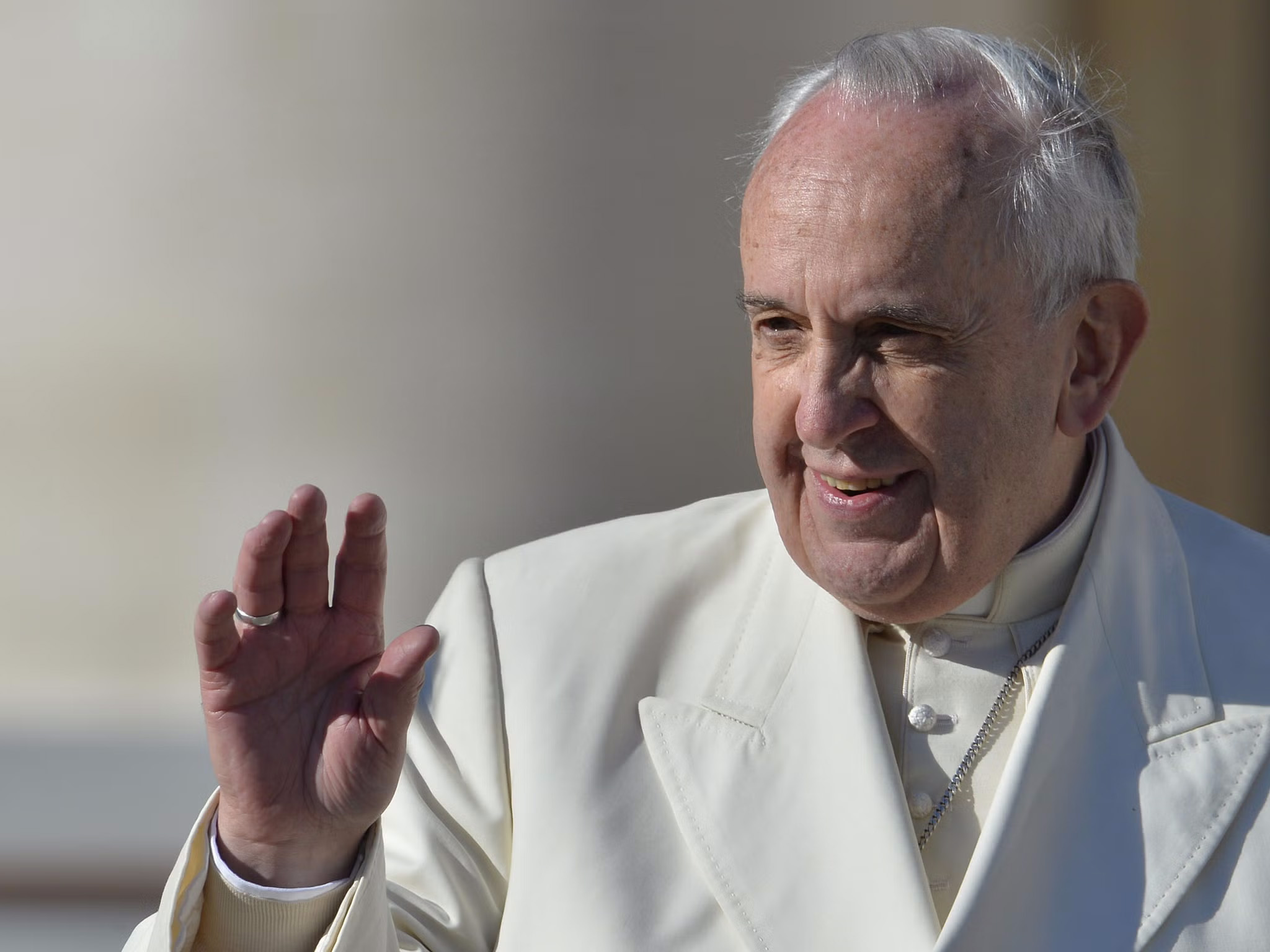
Pope Francis, the 266th pontiff of the Roman Catholic Church and the first from the Americas, died on Sunday at the age of 88, bringing an end to a historic papacy defined by humility, social advocacy, and efforts to modernise the Church. The Vatican confirmed his death late Sunday evening in a brief statement, noting he passed away peacefully at the Apostolic Palace, surrounded by senior clergy and aides.
Born Jorge Mario Bergoglio in Buenos Aires, Argentina, Pope Francis was elected to the papacy in 2013 following the resignation of Pope Benedict XVI. His elevation as the first Jesuit pope and the first from the Global South signalled a shift in the Church’s global focus. His leadership inspired millions, particularly in Latin America and the Caribbean, where his messages of compassion, environmental stewardship, and economic justice found deep resonance.
Over his 12-year papacy, Pope Francis worked tirelessly to address some of the most complex issues facing the modern Church—sexual abuse scandals, declining attendance, and widening political divides. He was both praised and criticised for his efforts to reach across ideological lines, calling for greater inclusion within the Church, particularly towards the LGBTQ community, divorced Catholics, and interfaith dialogue.
In the Caribbean, a region with a deep Catholic heritage, Pope Francis was seen as a moral voice and a beacon of reform. His 2015 visit to Cuba helped pave the way for a historic thaw in US–Cuba relations, while his outspoken stance on climate change galvanised support for environmental movements across island nations vulnerable to rising sea levels and intensifying hurricanes.
“Pope Francis was a man of the people. His commitment to the poor, the marginalised, and our common home touched the lives of many here in the Caribbean,” said Bishop Harold Richards of the Antilles Episcopal Conference. “He brought a human face to the Church.”
Though increasingly frail in recent years, Francis continued to carry out his duties with determination. He remained active in Vatican affairs until only weeks before his passing, delivering his final public message on Easter Sunday, in which he called for peace in the Middle East and solidarity with migrants worldwide.
A conclave of cardinals will be convened in the coming weeks to elect a new pope. In the meantime, the College of Cardinals will oversee the governance of the Church.
Pope Francis leaves behind a legacy of bold compassion, spiritual leadership, and a vision of a more open, engaged, and globally conscious Catholic Church. Across the Caribbean and the world, churches will toll their bells in mourning—and in gratitude for a life of service.
Funeral services are expected to be held later this week in St Peter’s Basilica. A national day of mourning has been declared in Argentina.