
Politics
“Difficult days ahead” – Carvin Malone after losing VIP chairman’s contest

By MERRICK ANDREWS
Online News Editor
While congratulating Premier Natalio Wheatley for winning the chairmanship of the Virgin Islands Party (VIP) on Sunday and lauding the congressional process, held in Pockwood Pond, Territorial At-Large Representative Carvin Malone noted that there are difficult times with General Elections on the horizon.
Malone, a past president of the party and a veteran member, received 12 votes compared to 60 received by the premier.
In a statement on Facebook, Malone also congratulated the “entire 76 member Congress for a most impressive display of democracy in the Virgin Islands”.
“There are difficult days ahead and a fully united Virgin Islands community is required to protect and defend the successes of our forebears and to fulfill the territory’s aspirations for strong political, economic, environmental and social institutions in support of the journey to self-determination. May GOD continue to bless our most beautiful Virgin Islands,” he concluded in his social-media statement.
Malone also revealed that Sunday’s meeting not only convened for the election of executive members but for the election of 10 of 13 VIP candidates to contest the 2023 General Elections.
He described the voting as “open and transparent” and promised that the “entire slate of executive members and of VIP candidates will be widely published”.
However, Premier Wheatley has since disclosed that the 10 candidates confirmed are 1st district – Dr. Karl Dawson; 4th district – Luce Hodge-Smith; 5th district – incumbent Kye Rymer; 6th district – incumbent Alvera Maduro-Caines; 7th district – incumbent and Premier Wheatley; 8th district – Allen Wheatley; 9th district – incumbent Vincent Wheatley; and territorial at-large candidates – who will all re-contest — Carvin Malone, Sharie de Castro and Neville ‘Sheep’ Smith.
Incumbent Shereen Flax-Charles and the candidates for districts two and three will likely be ratified at a next special meeting of the VIP Congress, at a date to be announced, according to sources.
Last week, Malone, also a former health minister, crossed the floor to re-join the National Unity government while announcing his plans to contest the VIP chairman’s seat.
His reason: “he never left the VIP” and his tasks as an opposition member were successfully achieved.









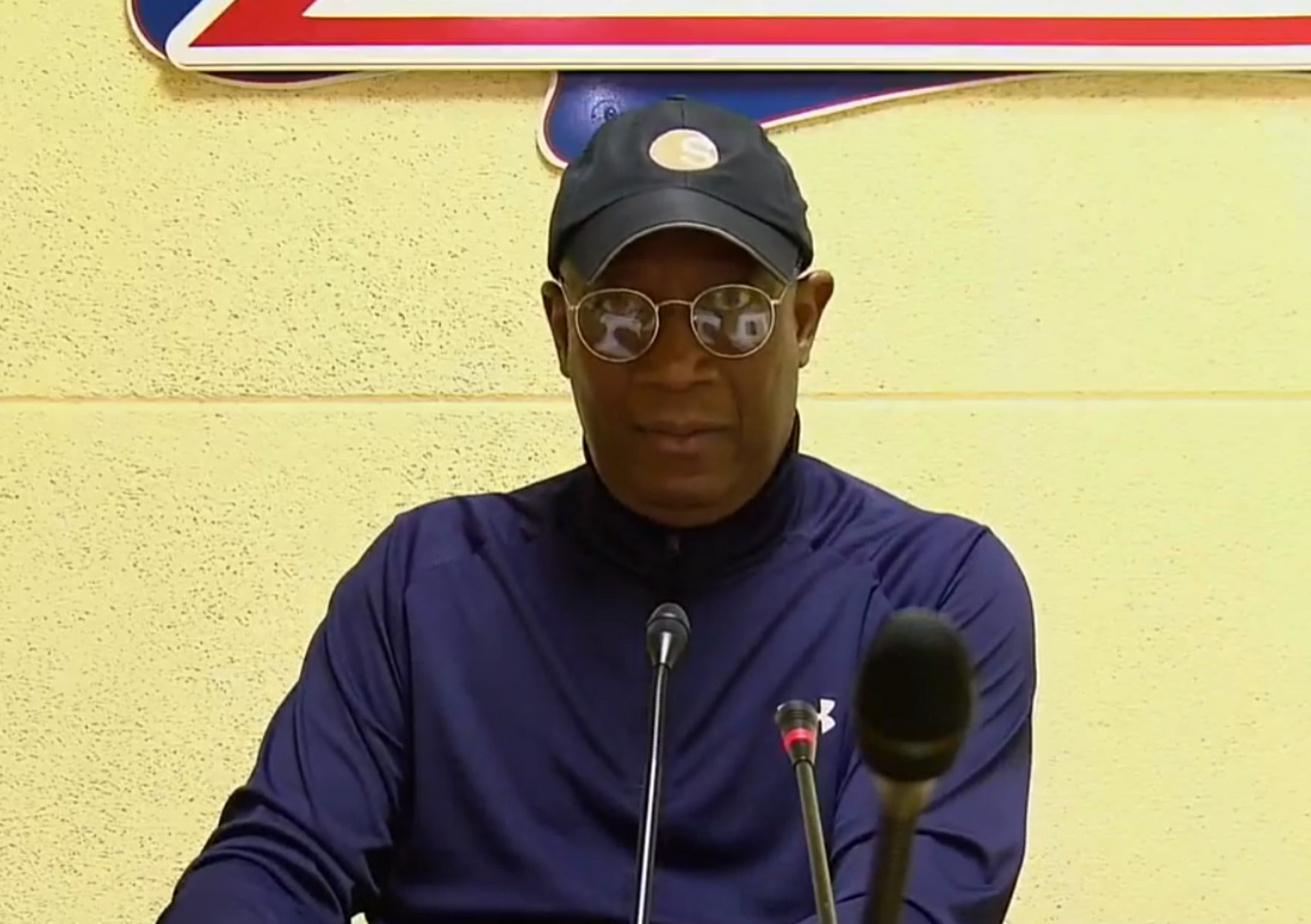
Political leaders in the Virgin Islands are focusing on personal attacks rather than policy and have failed to present a clear vision for the territory, according to concerns raised by commentator Claude Skelton Cline during the May 5, broadcast of Honestly Speaking with Claude Skelton Cline.
Speaking during a program titled “We Will Not Be Fooled Again Pt. 4,” Skelton Cline said political discourse has become increasingly divisive, with parties and public figures prioritizing criticism of opponents over substantive discussion of national issues.
He questioned whether elected officials have articulated a clear direction for the country, asking listeners to identify any recent statements outlining a national vision.
“Have you heard anybody … articulate what is their vision for this country?” he said.
Skelton Cline also warned residents against supporting leaders based on promises without clear plans, urging greater accountability in political leadership.
He said the focus on partisan conflict has contributed to public dissatisfaction, particularly as residents face economic challenges and concerns about public services.
The remarks come amid ongoing political activity in the territory, with multiple parties and groups positioning themselves ahead of future elections.
Skelton Cline said the electorate should demand more substantive engagement from political leaders and avoid being influenced by rhetoric without policy direction.
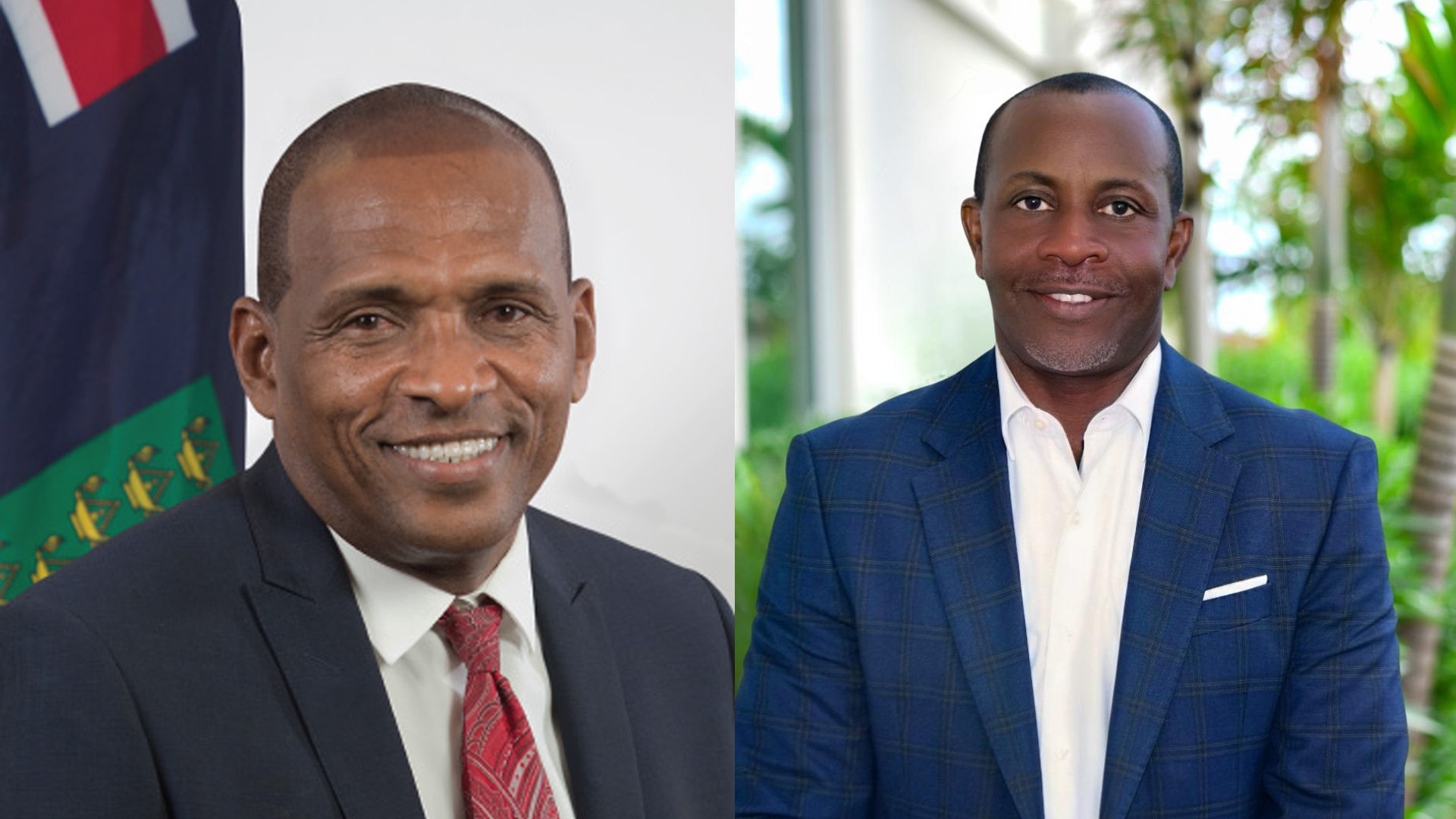
Vanterpool, in a letter dated April 9, raised concerns about whether delegates in districts 1, 5 and 7 were selected through properly convened district association meetings and whether the process complied with the party’s constitution. He also questioned the eligibility of certain participants and suggested delaying the finalization of the delegate list to allow additional meetings.
In response, Cline said the process followed the party’s constitutional framework, emphasizing that district associations — not candidates — are responsible for selecting delegates.
“To suggest there was something unfair at the convention level is irresponsible,” Cline said during a public address. “No candidate has any right to select delegates — that is the sole responsibility of the district associations.”
Cline confirmed that each district association is tasked with sending delegates to the convention and that candidates are required to campaign for those delegates’ votes once selected.
“You don’t get to pick who votes for you — that’s not how a democratic process works,” he said. “One hundred and twenty-one delegates made a decision, and that decision must be respected.”
The exchange between the two men followed a closely contested leadership election. Penn secured 65 votes to retain the chairmanship, while Vanterpool received 39 votes and Ronnie W. Skelton received 17. Turnbull was elected deputy chairman with 64 votes, defeating Myron V. Walwyn, who received 57.
Cline also addressed the concerns in a written response, stating that the NDP constitution establishes district associations as responsible for political organization at the district level and for putting forward delegates. He noted that while the constitution does not prescribe a specific meeting solely for delegate selection, it implies that such decisions should arise from properly convened association meetings.
“The preferred and constitutionally consistent approach is that delegates emerge from properly convened association processes,” Cline wrote.
He further clarified that membership in district associations is based on residency and that both association officers and delegates should come from within their respective districts.
Cline said the party’s executive committee has authority to ensure district associations remain functional and may facilitate meetings where necessary to maintain compliance with the constitution. He added that the concerns raised by Vanterpool were reviewed and that guidance was issued to relevant districts.
The matter gained public attention after both Vanterpool’s letter and Cline’s response were circulated.
Cline rejected suggestions that the dispute reflects broader instability within the party.
“The party is not breaking up — the core is strong,” he said. “This is not a game. The politics of this country is not a playground.”
The NDP has maintained that the convention was conducted in accordance with its constitution and that the outcome reflects the will of the delegates as the party prepares for the next general election.
ADVERTISEMENT:

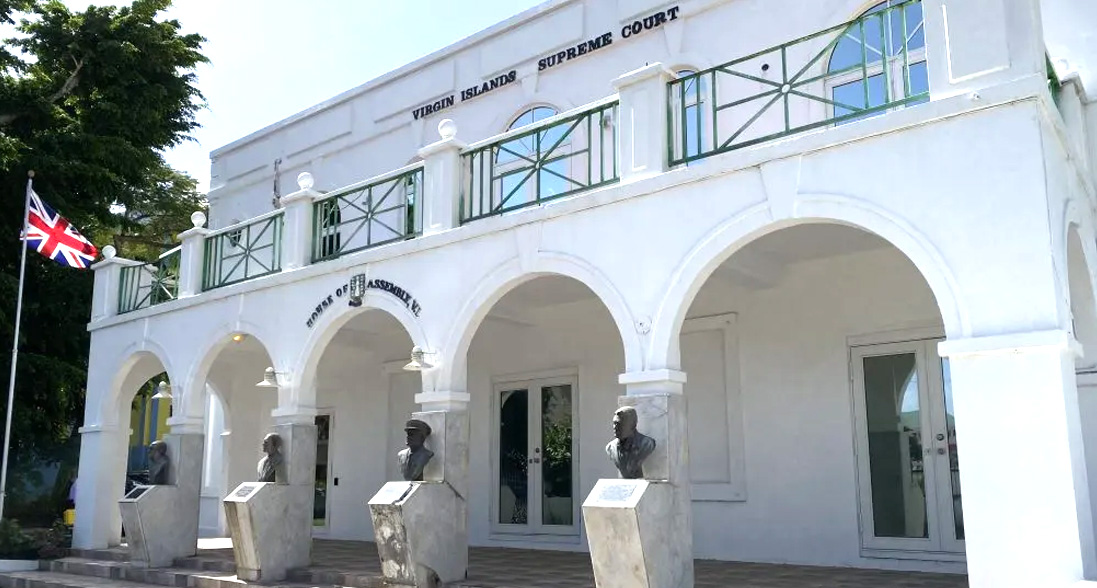
Concerns are being raised about how decisions are being made within the House of Assembly, with criticism focusing on the absence of data, limited public transparency and questions about whether sufficient expert guidance is being used in shaping national policies.
During the April 14 broadcast of Honestly Speaking on ZBVI Radio, host Claude Skelton Cline questioned the basis on which key national decisions are being taken, particularly in relation to ongoing constitutional discussions. “What measurements are being used?” he asked, pointing to what he described as a lack of data-driven decision-making.
The House of Assembly is the territory’s legislative body, responsible for making laws, approving budgets and overseeing government actions. It operates within the framework of the Virgin Islands Constitution Order, 2007, which outlines governance structures, including the role of elected members and the appointment of the Premier.
Skelton Cline said that while major policy decisions are being discussed, including constitutional reform, there is little public evidence that those decisions are being guided by comprehensive data such as census information or national assessments. “We don’t even know how many people are in the country,” he said, questioning how planning decisions can be made without current population data.
He also raised concerns about whether constitutional expertise is being sufficiently utilized. “Which constitutional lawyer… sat with you through this exercise?” he asked, referring to the ongoing review of governance structures.
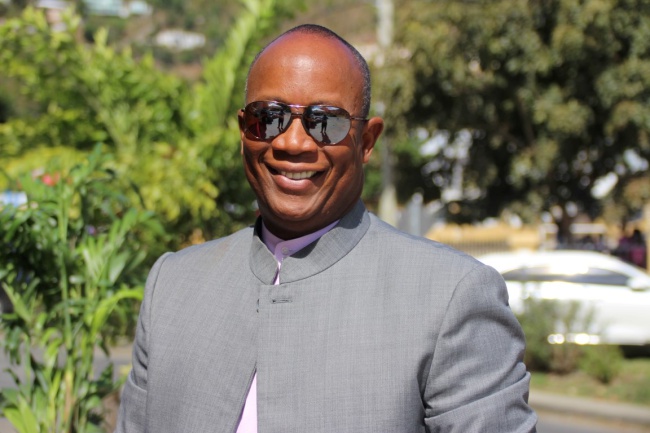
Claude Skelton Cline
Under the current system, the House of Assembly consists of 15 members, including 13 elected representatives, and serves as the primary law-making body in the territory. The body is also responsible for debating and shaping policies that affect national development, including constitutional reforms that may require approval from the United Kingdom.
Skelton Cline said decisions of this scale require a higher level of technical input and evidence-based planning, particularly given the long-term implications. He compared the process to making decisions without proper measurements, stating that policies should be informed by verifiable data rather than assumptions.
“Imagine… making decisions based on what you feel, what you think, what you’re guessing,” he said.
The comments come amid ongoing public discussion surrounding governance and constitutional reform in the Virgin Islands, including calls for greater accountability and transparency in decision-making. While the territory maintains internal self-governance, significant structural changes to its political system must align with the existing constitutional framework and, in some cases, receive approval from the United Kingdom.
Skelton Cline urged both officials and the public to seek clarity on how decisions are being made and what information is being used to support them, emphasizing the need for accountability in governance.
Love Casino Review: Detailed Look at Bonuses, Games, Security & More
Barz Casino Gaming Problems: A Comprehensive Review
Detalles sobre el Casino Barcelona y sus servicios ofrecidos.

Jamal Jones Killed on I-44 After Being Struck by Tractor-Trailer Near Mt. Vernon

Supplier Accused of Misappropriating Funds for Virgin Islands Icon Awards; Case Referred to Police

Three Contestants Disqualified After Calypso Rule Violations












-
 Local News1 week ago
Preparedness Central to Protecting Virgin Islands, Premier Says
-

 Entertainment1 week ago
Mystiq Flax Charles Lands International Modeling Representation After Title Win
-

 International1 week ago
BVI Delegation Engages CARICOM Ambassadors in Taiwan to Strengthen Regional Ties
-
Health1 week ago
Healthcare System Faces Strain Amid Staffing Shortages and Leadership Vacancies
-
Local News1 week ago
Skelton Cline Says Fahie Fallout Still Affecting Virgin Islands
-

 Crime/Police6 days ago
Governor Rejects PSC Recommendation for Police Commissioner, Orders New Recruitment Process
-

 Local News1 week ago
Motorists Advised of Delays as Sea Cow’s Bay Works Continue
-

 Entertainment6 days ago
“He Wants It”: Jason Gardener Backs Mystiq for Global Fashion Career