
Local News
British Virgin Islanders Exempt from UK ETA Requirement

Travellers from visa-exempt countries to the United Kingdom will soon need to secure an Electronic Travel Authorization (ETA) as part of the UK government’s new border control initiative. Starting January 8, citizens from visa-exempt nations outside Europe must obtain an ETA before visiting the UK. British and Irish citizens, as well as those traveling with a British overseas territories citizen passport are exempt.
This digital system aims to streamline entry processes and enhance security.
The ETA is part of the UK’s effort to fully digitize its border and immigration system, following similar programs in Australia and the United States. By April 2, all visa-exempt European travelers will also need ETAs. Nations already requiring a visa to enter the UK will remain subject to the current visa application processes.
The ETA grants permissions similar to the UK’s Standard Visitor Visa, allowing multiple visits of up to six months over two years or until the traveler’s passport expires—whichever comes first. The authorization costs £10, and applications, available online, are typically processed within 24 hours, though applicants are advised to allow up to three business days.
You do not need an ETA if you hold a visa or have permission to live, work, or study in the UK, including settled or pre-settled status or the right of abode. BAdditionally, residents of Ireland traveling from Ireland, Guernsey, Jersey, or the Isle of Man do not require an ETA. Dual citizens with British or Irish citizenship can prove their permission to travel using a British passport, Irish passport, or another passport with a certificate of entitlement.
Eligible non-European travelers can apply beginning November 27, while European travelers may apply starting March 5.
This move aims to bolster the UK’s border security by enabling more thorough checks on travelers before arrival. The system, linked to travelers’ passports, is designed to streamline entry processes and enhance efficiency. It mirrors the European Union’s upcoming ETIAS system, which will require similar permissions for travel to 30 European countries starting mid-next year.
All visa-exempt nationals—except British and Irish citizens—will need an ETA for tourism, short-term study, family visits, or business in the UK. Travelers from nations already requiring a visa will still need to apply for the appropriate visa for their trip’s purpose.
From January 8, travelers from the following countries and territories will need an ETA:
North America: Anguilla, Antigua and Barbuda, Aruba, Bahamas, Barbados, Belize, Bermuda, Bonaire, Sint Eustatius and Saba, Canada, Cayman Islands, Curacao, Grenada, Guatemala, Mexico, Montserrat, Nicaragua, Panama, Saint Kitts and Nevis, Saint Lucia, Sint Maarten, Saint Martin, Saint Vincent and the Grenadines, Trinidad and Tobago, Turks and Caicos, and the USA.
South America: Argentina, Brazil, Chile, Colombia, Falkland Islands, Guyana, Paraguay, Peru, and Uruguay.
Oceania: Australia, Kiribati, Marshall Islands, Micronesia, Nauru, New Zealand, Palau, Papua New Guinea, Pitcairn Island, Samoa, Solomon Islands, Tonga, and Tuvalu.
Asia: Brunei, Hong Kong, Israel, Japan, Macao, Malaysia, Maldives, Singapore, South Korea, and Taiwan.
Africa: Botswana, Mauritius, Seychelles, and Togo.
By April 2, travelers from visa-exempt European countries, including Andorra, Austria, Belgium, France, Germany, Italy, Spain, and Sweden, will also require an ETA.
Source:









Unite BVI has increased the funding available through its 2026 Impact Challenge entrepreneurship competition to $250,000, following the addition of a new donor, and is inviting Virgin Islands entrepreneurs to apply for grants supporting businesses that address environmental challenges while creating economic opportunities.
Lauren Keil, Programme Manager of the VI Purpose Fund, announced the funding increase during an appearance on The Morning Facts with Cindy Rosan, revealing that the competition’s prize pool has grown from the previously announced $200,000.
“In fact, I’m excited to announce we actually just recently had a new donor come to the table and say, ‘We love this program, we want to put $50,000 additionally on the table,’” Keil said. “So we now have $250,000 to give out. This is the first time we’re publicly announcing it.”
The Impact Challenge is a flagship initiative of the VI Purpose Fund, which supports Virgin Islands entrepreneurs developing businesses that promote environmental sustainability while strengthening the local economy. The program is entering its second year after supporting two winning ventures in 2025 — BlockWorks VI and Report the Reef.
Keil said this year’s competition focuses on projects that contribute to ocean health and environmental resilience, but stressed that eligibility extends beyond businesses operating directly on the water.
“Before you think, ‘Oh, my business isn’t directly related to the ocean,’ there are so many land-based businesses that affect the ocean’s health,” she said.
The challenge is seeking applications in six priority areas, including sustainable fisheries, food sovereignty, carbon reduction, sargassum management, recycling and circular economy initiatives.
“Any business that is replacing a product that we import regularly with a locally manufactured product has a reduction of carbon emissions linked to it,” Keil said. “Any farming business that is really building our resilience and making us a stronger food sovereign nation is also eligible.”
She added that entrepreneurs developing solutions for sargassum seaweed blooms are encouraged to apply.

“We all know the problems of sargassum seaweed blooms that we receive, but there are entrepreneurs in other countries that have found viable business solutions to sargassum problems,” Keil said.
According to Unite BVI, businesses addressing sustainable fisheries, regenerative aquaculture, ocean-linked food production, marine restoration, waste reduction, recycling and import substitution are among those being targeted through the competition.
Applications opened on April 2 and will remain open until June 10. Keil said entrepreneurs do not need a trade licence when submitting their initial application but must obtain one before advancing to the final stages of the competition.
“We encourage entrepreneurs who don’t have trade licences but want to apply, please apply for your trade licence,” she said.
Last year’s inaugural challenge attracted 47 applications.
“We had 47 applications last year, which for an inaugural business competition we thought was really great,” Keil said. “This year we’re hoping for three or four times that. That is the dream, and we have a lot of interest.”
The selection process will narrow applicants to six finalists who will pitch their business ideas before judges including Sir Richard Branson and Rick Kearney.
“The judges can choose to give all $250,000 to one outstanding entrepreneur or divide it among multiple businesses, depending on the strength of the applications,” Keil explained.
In addition to funding, successful applicants will receive a year of business incubation and acceleration support.
“At Unite BVI, we commit to the winners of the Impact Challenge by giving them a full year of business incubation and acceleration support services,” Keil said. “We build a bespoke team around them to really support them and give them every chance to succeed.”
The VI Purpose Fund was established to support businesses that strengthen economic resilience while protecting the Virgin Islands’ natural environment. Unite BVI officials have said the initiative is designed to encourage local innovation and develop solutions with both environmental and commercial benefits.
Former Communications and Works Minister Mark Vanterpool has defended the Cruise Pier Development Project against longstanding criticism, arguing that the facility delivered economic benefits and value for money while proposing a new phase of waterfront development that could include hotel towers near the cruise pier.
Speaking on The Morning Facts with Cindy Rosan on May 21, Vanterpool said the project, which was developed during his tenure as minister responsible for ports, has proven its worth through increased visitor arrivals, economic activity and revenue generation.
“The port got value for money,” Vanterpool said, citing independent evaluations conducted after construction was completed.
The Cruise Pier Development Project, which opened in 2015, expanded the territory’s capacity to accommodate large cruise ships and included the construction of the Tortola Pier Park commercial complex. The project became one of the most debated public infrastructure developments in Virgin Islands history after its cost rose beyond original estimates and questions were raised about procurement and oversight.
Vanterpool rejected suggestions that the project failed to justify its final cost, arguing that changes made during construction were necessary to create a more resilient and functional facility.
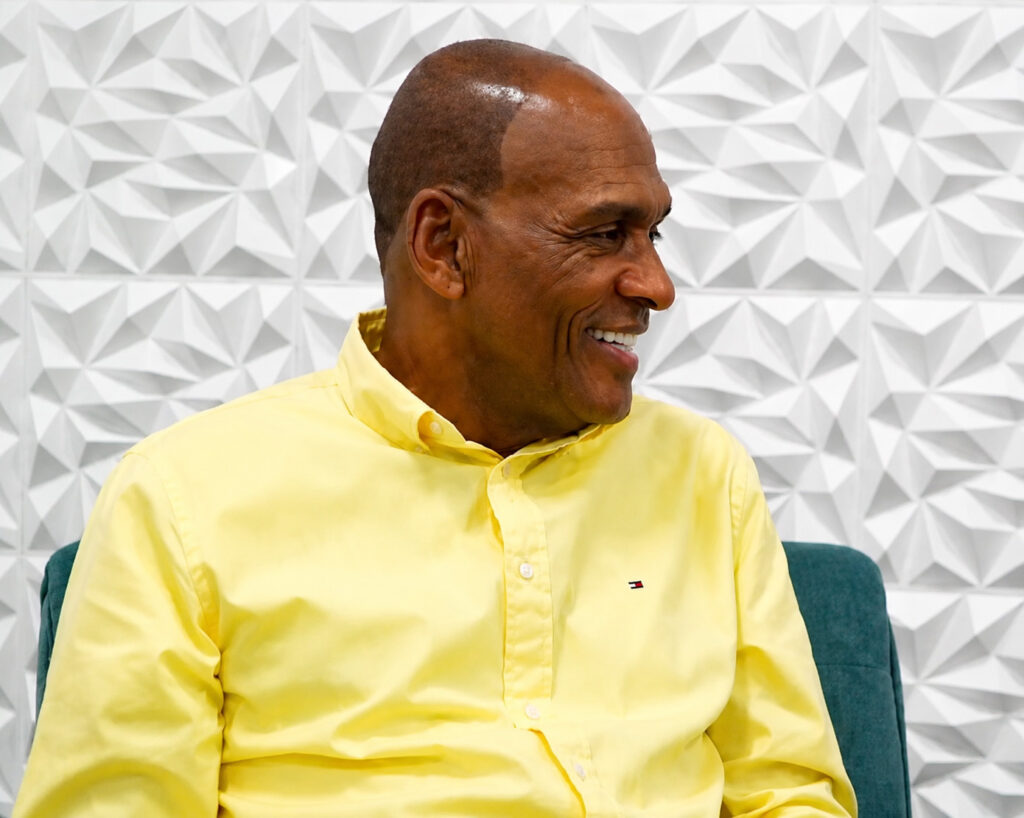
According to Vanterpool, the original proposal would not have adequately accommodated modern cruise vessels and included structures that would have been less resistant to hurricanes. He said the decision was made to redesign elements of the project, including constructing reinforced concrete and steel buildings and expanding docking capacity.
“We decided we were going to build a dock that can hold two ships that are there now,” he said.
Vanterpool said independent assessments commissioned after completion concluded that the project represented value for money and generated substantial economic returns for the Territory through tourism-related spending.
“The estimated benefit to the territory in terms of gross domestic product was over $100 million that the cruise pier would produce every year,” he said.
He also noted that the financing used to construct the facility is nearing repayment.
“I am very pleased with the cruise pier,” Vanterpool said.
While defending the development, Vanterpool argued that additional investment is needed to maximize the potential of the waterfront district. He revealed that he recently discussed new development concepts for the area, including the possibility of constructing hotel accommodations near the cruise pier.
Among the ideas he said have been proposed is a twin-tower hotel development on opposite sides of the waterfront, including one tower near the cruise pier and another in the Village Cay area.
“I prefer to build eventually what they call a tower hotel,” Vanterpool said, adding that he recently shared the concept with officials involved in discussions about the future of the area.
The proposal, he said, would build on existing tourism infrastructure and create additional accommodations within walking distance of the cruise terminal and Road Town’s commercial district.
Vanterpool said the Cruise Pier Development Project should ultimately be evaluated by its long-term economic contribution to the Virgin Islands rather than the political controversy that surrounded its construction.
“Are the constituents of the territory, the residents, benefiting economically from it? Yes,” he said. “The loan that we borrowed to build it is almost finished, and the territory continues to benefit from it.”

Former Communications and Works Minister Mark Vanterpool has defended Honourable Lorna G. Smith’s decision to join the Virgin Islands Party-led government following the 2023 general election, saying the move was her own and that the Territory benefited from her experience and expertise.
Speaking on The Morning Facts with Cindy Rosan on May 21, Vanterpool rejected suggestions that he influenced his sister’s decision to support the Virgin Islands Party administration after she was elected as an at-large representative on the National Democratic Party ticket.
“Honourable Lorna Smith, if you know my sister, my dear sister, if you know her, she’s a very intelligent person,” Vanterpool said. “She is a very clear-minded person of the direction she wants to go, and she makes her own decisions.”
Smith’s decision in April 2023 altered the political balance of the House of Assembly after no party secured an outright majority in the general election. The Virgin Islands Party won six seats, one short of the seven required to form a government. Shortly after the election, Smith agreed to support the Virgin Islands Party administration led by Honourable Dr. Natalio D. Wheatley and was subsequently appointed Deputy Premier and Minister for Financial Services, Labour and Trade. The move generated significant public debate because she had campaigned as a National Democratic Party candidate and is married to former Premier Dr. D. Orlando Smith, founder of the National Democratic Party.
Vanterpool said the controversy surrounding the decision has overshadowed what he views as its benefits for the Territory.
“Was it the right decision? I will stand here and say, I think it was,” he said. “The territory needed her expertise in what she was doing.”
He argued that Smith’s decades of experience in public administration, financial services and economic development would have had a greater impact from within government than from the opposition benches.
“I didn’t think the territory would benefit from that expertise as well from the backbench or from an opposition side,” Vanterpool said. “What she did benefited the territory, and it continues to benefit the territory.”
The former Fourth District representative also dismissed claims that he played a role in persuading Smith to support the government.
“It was her decision,” Vanterpool said. “I don’t want people to think that she’s a very intelligent person who makes her own decisions as to what she should do. She made a decision, and I support it.”
Smith herself previously stated that neither her husband, former Premier Dr. D. Orlando Smith, nor others made the decision for her, emphasizing that it was a choice she reached independently after post-election discussions.
While acknowledging that some voters disagreed with the move, Vanterpool said elected officials must ultimately focus on governing rather than political divisions.
“People will always have opposition to that kind of thing because people hold on to the party subject and all those issues when an election is over,” he said. “Let’s see how we can make the country better.”
Vanterpool maintained that Smith’s decision should be judged by its impact on the Territory rather than the political controversy it generated.
“I will not flinch by saying that I think she made the right decision,” he said. “What she did benefited the territory.”

Unite BVI Expands Impact Challenge Fund to $250,000 for Entrepreneurs

Vanterpool Defends Cruise Pier Project, Proposes Hotel Expansion at Waterfront

Vanterpool Defends Hon. Lorna Smith’s Post-Election Move to Government

Jamal Jones Killed on I-44 After Being Struck by Tractor-Trailer Near Mt. Vernon

Reggae Sensation Pressure Busspipe Hospitalised

Three Years After Fatal Shooting, Suspect Reportedly Apprehended in USVI