

Politics
A “mistake” granting contracts to Skelton-Cline: Premier

By MERRICK ANDREWS AND CATHY RICHARDS
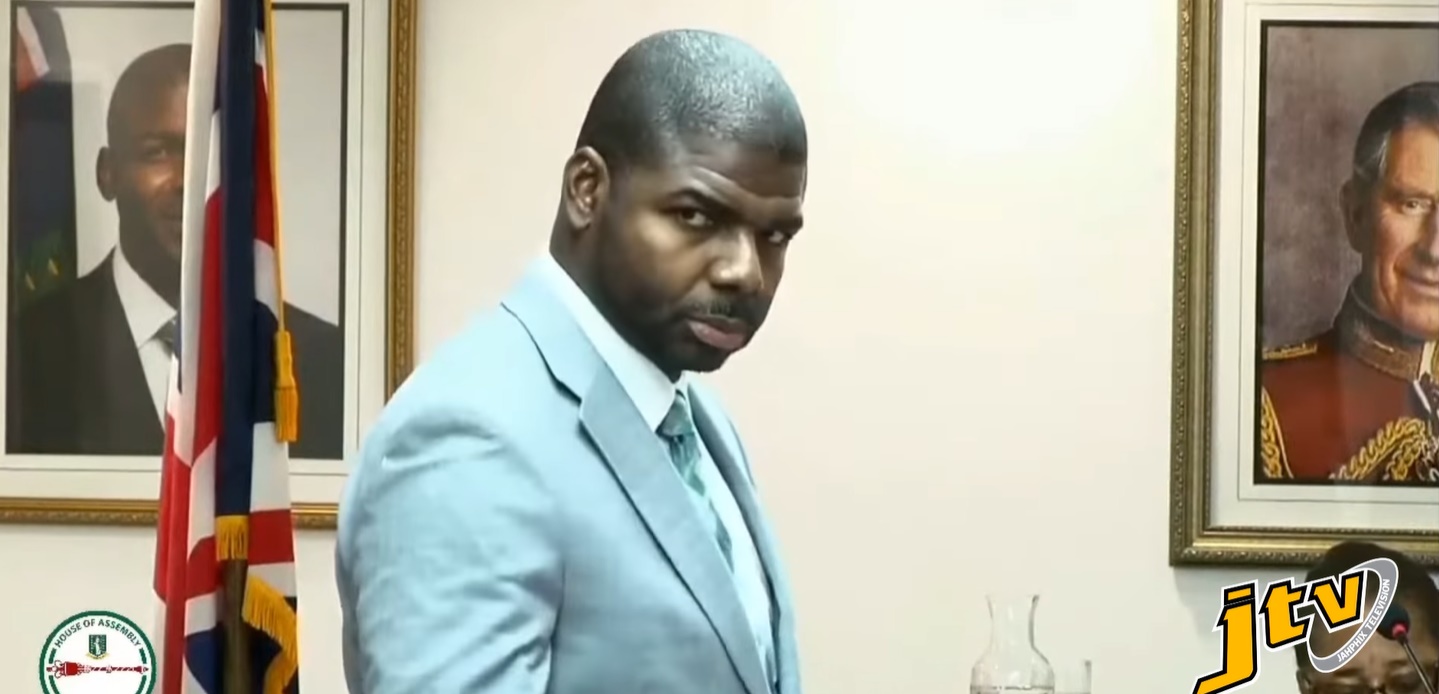
(JTV NEWS) — Responding to the Auditor General’s Report on the contracts granted to Claude Skelton-Cline, Premier and Minister for Finance Natalio Wheatley said the government made a “mistake” in those business dealings.
The Premier made this and other comments during the February 21, 2023, sitting of the House of Assembly.
The Auditor General’s Report has disclosed that the three contracts awarded and the over $16,000 paid monthly to Claude Skelton-Cline was not a value-added move but rather employment for the contractor.
Skelton-Cline is a former managing director of the BVI Ports Authority, a former government consultant, and is also well known for being the host of ‘Honestly Speaking’ on ZBVI Radio.
In the House on Tuesday, Premier Wheatley admitted that the contracts given under the Andre Fahie-led administration to the talk show host and pastor, were not only a mistake but he (Wheatley) gave support for these contracts — and that was also a mistake.
“And certainly, I have to say, Madam Speaker, yes this contract that we speak about, these contracts for Claude Skelton-Cline did come to Cabinet, and I did support them, and I am here to say to you, Madam Speaker, that I believe that I believe my support for these contracts was a mistake, and I believe that the former Premier made a mistake in engaging Claude Skelton-Cline with these contracts. And it is okay to acknowledge a mistake,” Wheatley told the House.
The Premier said he hopes that Skelton-Cline remains his friend after this contribution in the House.
“And I do believe my good friend understands the concept because he has a whole platform dedicated to speaking honestly and openly. And my good friend, whenever he has the opportunity, has no qualms about expressing his views openly and honestly. And if that means that some persons get offended so be it. I, myself have been the subject of some of his Honestly Speaking discussions which he has every right to do.
“And regardless of the conclusions he has come to about myself or anybody else, I remain his friend. I hope that once I finish saying what I am saying, he will also remain my friend. But I have a duty and a responsibility and duty to the people of the Virgin Islands but I just hope that we can still be friends after I say what I say Madam Speaker because we speaking honestly,” the Premier said.
The territory’s leader went on to say: “We have Mr. Claude Skelton-Cline who received, I believe, a total of three contracts. He was paid exorbitantly for those contracts and his contribution to the success of the initiatives that he was tasked to complete was marginal at best.”
The territory’s leader went on to say: “We have Mr. Claude Skelton-Cline who received, I believe, a total of three contracts. He was paid exorbitantly for those contracts and his contribution to the success of the initiatives that he was tasked to complete was marginal at best.”
The Premier did not stop there. He started throwing punches from the political ring.
“And let’s speak about the fact that Mr. Claude Cline has been associated with political parties including the Virgin Islands Party of which I am the chairman. I don’t think he supports the Virgin Islands Party anymore which has been his pattern — if I might say that. He’s been jumping left, he’s been jumping right. Claude Skelton-Cline says he believes a woman will be elected as the next Premier. Now I am a fan of a woman Premier, of course. But I believe his biggest motivation for saying that a woman will be elected is because I am a man. And it’s become very clear that Claude Skelton-Cline does not support me in my political endeavours and he doesn’t support the Virgin Islands Party which I lead.
“And I will just give you my theory as to why that is. And Mr. Skelton-Cline, first he was talking about a woman then he start talking about his uncle, Ronnie. And Madam Speaker, I wonder if the public understands what’s taking place. First, he started with the Virgin Islands Party then he went to the National Democratic Party, then he went back to the Virgin Islands Party, and the current leader of the Virgin Islands Party doesn’t seem like I am going to be able to get through with him. Seems like the gravy train might be over there. Let’s jump on to the next host,” Premier Wheatley added.
The Commission of Inquiry Report called for full audits of the contracts granted to Skelton-Cline.
The report said, among other things, that the contracts did not go through any tender process. Each contract was valued at over $100,000.
The Auditor General’s Report on the contracts given to Skelton-Cline was laid on the table in the House of Assembly and has been seen by JTV News.
According to the Report, the contractual arrangement was initiated by Skelton Cline’s submission of a proposal to provide services and no efforts were expended to ascertain his qualifications to perform the proposed services or to obtain alternative submissions via a competitive process.
The report explains that on March 8, 2019, Skelton-Cline emailed a two-page proposal to the Premier’s Office offering his services as Chief Strategic Advisor “to assist the office of the Premier throughout the strategic planning and execution of key initiatives”.
The proposal outlined three specific areas of focus, as stated in the report, Climate Change, 1000 Jobs in 1000 Days, and Youth Empowerment. The proposal also presented a list of duties and responsibilities for the Chief Strategic Advisor.
The document included a proposed contractual period of four years at $196,000 per annum ($16,330.00 monthly) — a remuneration that would place the consultant’s pay above that of Cabinet Ministers and the Premier.
The report tells us that both the proposal and the draft agreement submitted by Skelton-Cline placed the consultant in an “advisory” role with no obligation or commitment to produce results and no requirement to demonstrate improvements or added value to the Public Service.
Two and a half weeks after submitting the proposals, Skelton-Cline was engaged by the Premier’s Office as a “strategic advisor” via petty contract and stipulated a term of six months from March 25, 2019, and remuneration of $16,330.00 per month with five-percent end-of-contract gratuity.
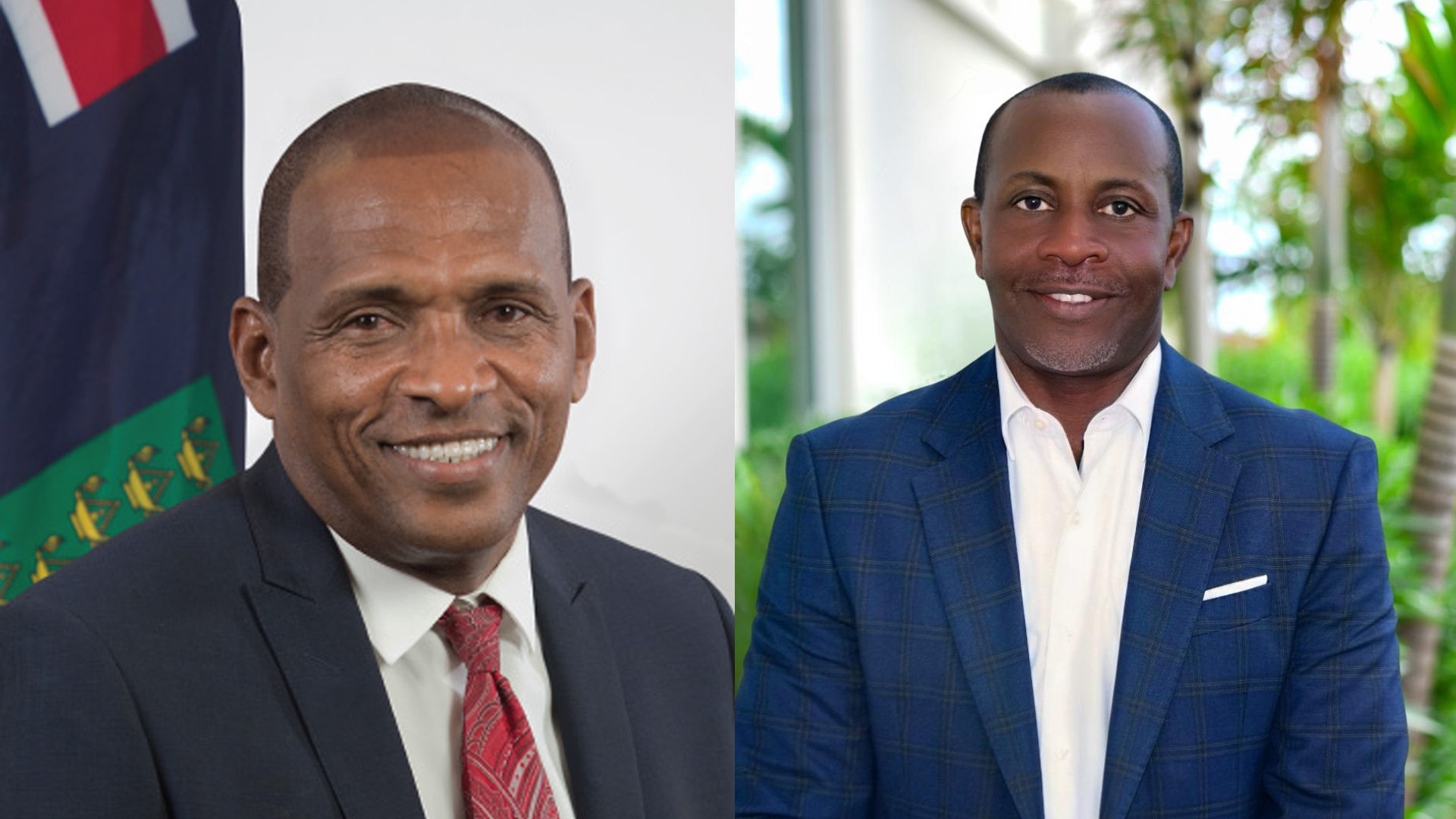
Vanterpool, in a letter dated April 9, raised concerns about whether delegates in districts 1, 5 and 7 were selected through properly convened district association meetings and whether the process complied with the party’s constitution. He also questioned the eligibility of certain participants and suggested delaying the finalization of the delegate list to allow additional meetings.
In response, Cline said the process followed the party’s constitutional framework, emphasizing that district associations — not candidates — are responsible for selecting delegates.
“To suggest there was something unfair at the convention level is irresponsible,” Cline said during a public address. “No candidate has any right to select delegates — that is the sole responsibility of the district associations.”
Cline confirmed that each district association is tasked with sending delegates to the convention and that candidates are required to campaign for those delegates’ votes once selected.
“You don’t get to pick who votes for you — that’s not how a democratic process works,” he said. “One hundred and twenty-one delegates made a decision, and that decision must be respected.”
The exchange between the two men followed a closely contested leadership election. Penn secured 65 votes to retain the chairmanship, while Vanterpool received 39 votes and Ronnie W. Skelton received 17. Turnbull was elected deputy chairman with 64 votes, defeating Myron V. Walwyn, who received 57.
Cline also addressed the concerns in a written response, stating that the NDP constitution establishes district associations as responsible for political organization at the district level and for putting forward delegates. He noted that while the constitution does not prescribe a specific meeting solely for delegate selection, it implies that such decisions should arise from properly convened association meetings.
“The preferred and constitutionally consistent approach is that delegates emerge from properly convened association processes,” Cline wrote.
He further clarified that membership in district associations is based on residency and that both association officers and delegates should come from within their respective districts.
Cline said the party’s executive committee has authority to ensure district associations remain functional and may facilitate meetings where necessary to maintain compliance with the constitution. He added that the concerns raised by Vanterpool were reviewed and that guidance was issued to relevant districts.
The matter gained public attention after both Vanterpool’s letter and Cline’s response were circulated.
Cline rejected suggestions that the dispute reflects broader instability within the party.
“The party is not breaking up — the core is strong,” he said. “This is not a game. The politics of this country is not a playground.”
The NDP has maintained that the convention was conducted in accordance with its constitution and that the outcome reflects the will of the delegates as the party prepares for the next general election.
ADVERTISEMENT:

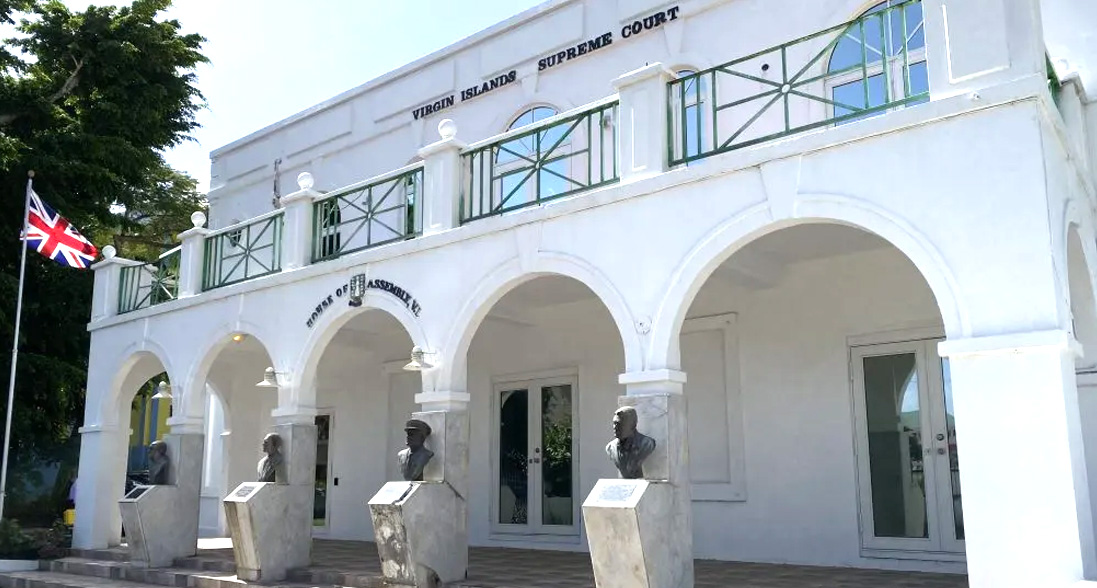
Concerns are being raised about how decisions are being made within the House of Assembly, with criticism focusing on the absence of data, limited public transparency and questions about whether sufficient expert guidance is being used in shaping national policies.
During the April 14 broadcast of Honestly Speaking on ZBVI Radio, host Claude Skelton Cline questioned the basis on which key national decisions are being taken, particularly in relation to ongoing constitutional discussions. “What measurements are being used?” he asked, pointing to what he described as a lack of data-driven decision-making.
The House of Assembly is the territory’s legislative body, responsible for making laws, approving budgets and overseeing government actions. It operates within the framework of the Virgin Islands Constitution Order, 2007, which outlines governance structures, including the role of elected members and the appointment of the Premier.
Skelton Cline said that while major policy decisions are being discussed, including constitutional reform, there is little public evidence that those decisions are being guided by comprehensive data such as census information or national assessments. “We don’t even know how many people are in the country,” he said, questioning how planning decisions can be made without current population data.
He also raised concerns about whether constitutional expertise is being sufficiently utilized. “Which constitutional lawyer… sat with you through this exercise?” he asked, referring to the ongoing review of governance structures.
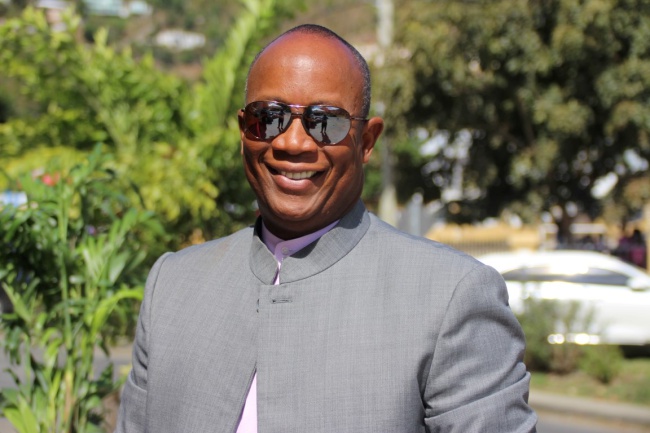
Claude Skelton Cline
Under the current system, the House of Assembly consists of 15 members, including 13 elected representatives, and serves as the primary law-making body in the territory. The body is also responsible for debating and shaping policies that affect national development, including constitutional reforms that may require approval from the United Kingdom.
Skelton Cline said decisions of this scale require a higher level of technical input and evidence-based planning, particularly given the long-term implications. He compared the process to making decisions without proper measurements, stating that policies should be informed by verifiable data rather than assumptions.
“Imagine… making decisions based on what you feel, what you think, what you’re guessing,” he said.
The comments come amid ongoing public discussion surrounding governance and constitutional reform in the Virgin Islands, including calls for greater accountability and transparency in decision-making. While the territory maintains internal self-governance, significant structural changes to its political system must align with the existing constitutional framework and, in some cases, receive approval from the United Kingdom.
Skelton Cline urged both officials and the public to seek clarity on how decisions are being made and what information is being used to support them, emphasizing the need for accountability in governance.

Growing public calls for the direct election of the Premier are highlighting tensions between voter expectations and the constitutional structure of governance in the Virgin Islands, where the head of government is not elected by popular vote but appointed through a parliamentary process.
Speaking on the April 14 broadcast of Honestly Speaking on ZBVI Radio, host Claude Skelton Cline pointed to increasing public support for selecting the Premier directly, describing it as part of a broader demand for political reform. “I am with the people of this country on matters such as voting for the Premier,” he said.
Under the current system, the Premier is not chosen by voters in a direct election. Instead, the Governor appoints the leader of the political party or coalition that commands a majority in the House of Assembly. This arrangement reflects the Virgin Islands’ parliamentary model, which is rooted in the British Westminster system.
Skelton Cline said many residents may not fully understand that implementing direct elections would require fundamental changes to that system. “Some of these changes that you are asking for will require a change in the very system in which our constitution is set down,” he said.
He added that such a shift would involve structural reforms beyond simple legislative amendments. “This requires structural and systemic change,” Skelton Cline said, noting that the current framework operates within constitutional limits that are influenced by the United Kingdom.
The Virgin Islands operates as a parliamentary democracy under the Virgin Islands Constitution Order, 2007, with executive authority formally vested in the British monarch and exercised locally through the Governor. While the territory has internal self-governance, significant constitutional changes require approval from the United Kingdom.
Debate over governance reforms has intensified in recent years, particularly following the work of the Constitutional Review Commission, which examined ways to modernize the territory’s political system and respond to public concerns about representation and accountability.
Skelton Cline said the current discussion reflects a broader desire among residents for greater involvement in leadership selection but warned that expectations must be aligned with legal and constitutional realities. “Why are you continuing to purchase a nine-inch shoe when your feet have grown to twelve?” he said, using an analogy to describe what he sees as a mismatch between public demands and the existing governance framework.
He urged government officials to provide clearer guidance to the public on what reforms are feasible and what steps would be required to achieve them. “Somebody needs to say to the people of this country… here is what needs to happen,” he said.
The issue is expected to remain central to ongoing constitutional discussions, as policymakers weigh public calls for reform against the legal and institutional structure that defines governance in the territory.
ADVERTISEMENT:

Rising Costs Will Intensify, Skelton Cline Warns as He Suggests Emergency Measures
Coronavirus disease 2019
888sport Acca Pub! Teljesen ingyenes játékforrások, választékok és előrejelzések














-

 Local News12 hours ago
East Winds Take Top Spot in BVIFA Under-14 Youth League After Week 3
-
 Crime/Police12 hours ago
Small Brent” Wanted in VI Murder Case Now Named in Sint Maarten Double Homicide Probe
-
 Health12 hours ago
BVI Monitors Cruise Ship Hantavirus Outbreak; Health Minister Says Local Risk Remains Low
-

 Local News12 hours ago
Man Seriously Injured in Two-Vehicle Crash at Sea Cows Bay
-

 Entertainment12 hours ago
64 Nominees Announced for 2026 Virgin Islands Icon Awards
-
 Education12 hours ago
TVET Week 2026 Highlights Skills Training as Key to BVI’s Future
-

 Local News12 hours ago
Winston Bolus League Opens With Wins for Relentless and Run It Up
-

 Local News12 hours ago
Nick Spizzirri Wins EMCs Tortola Classics Title After Five-Game Final