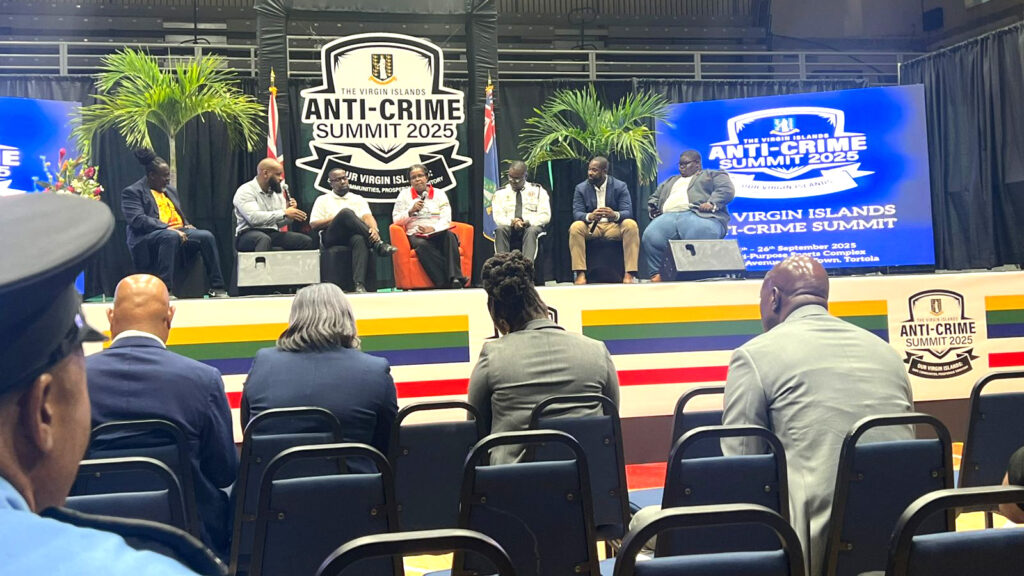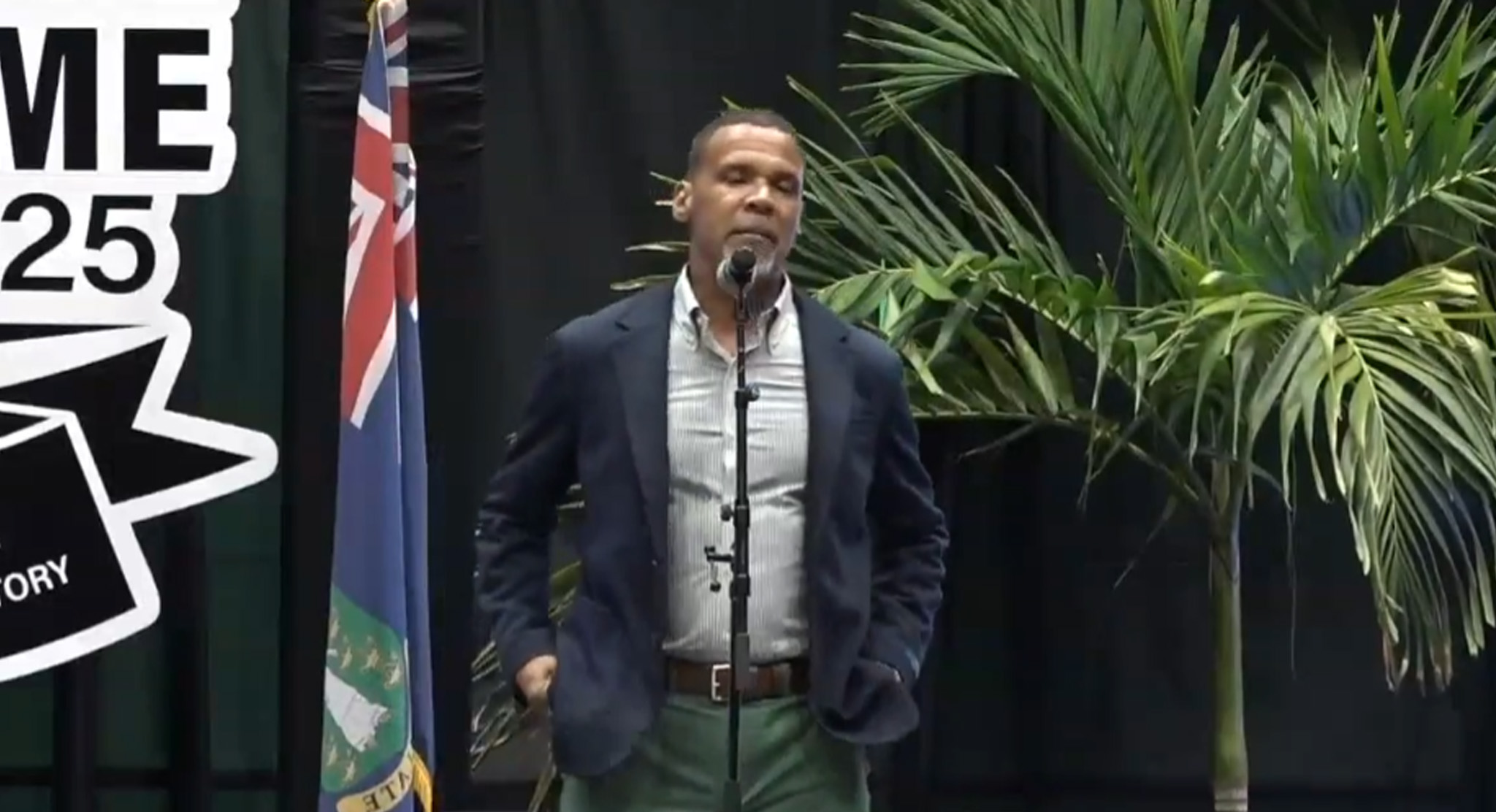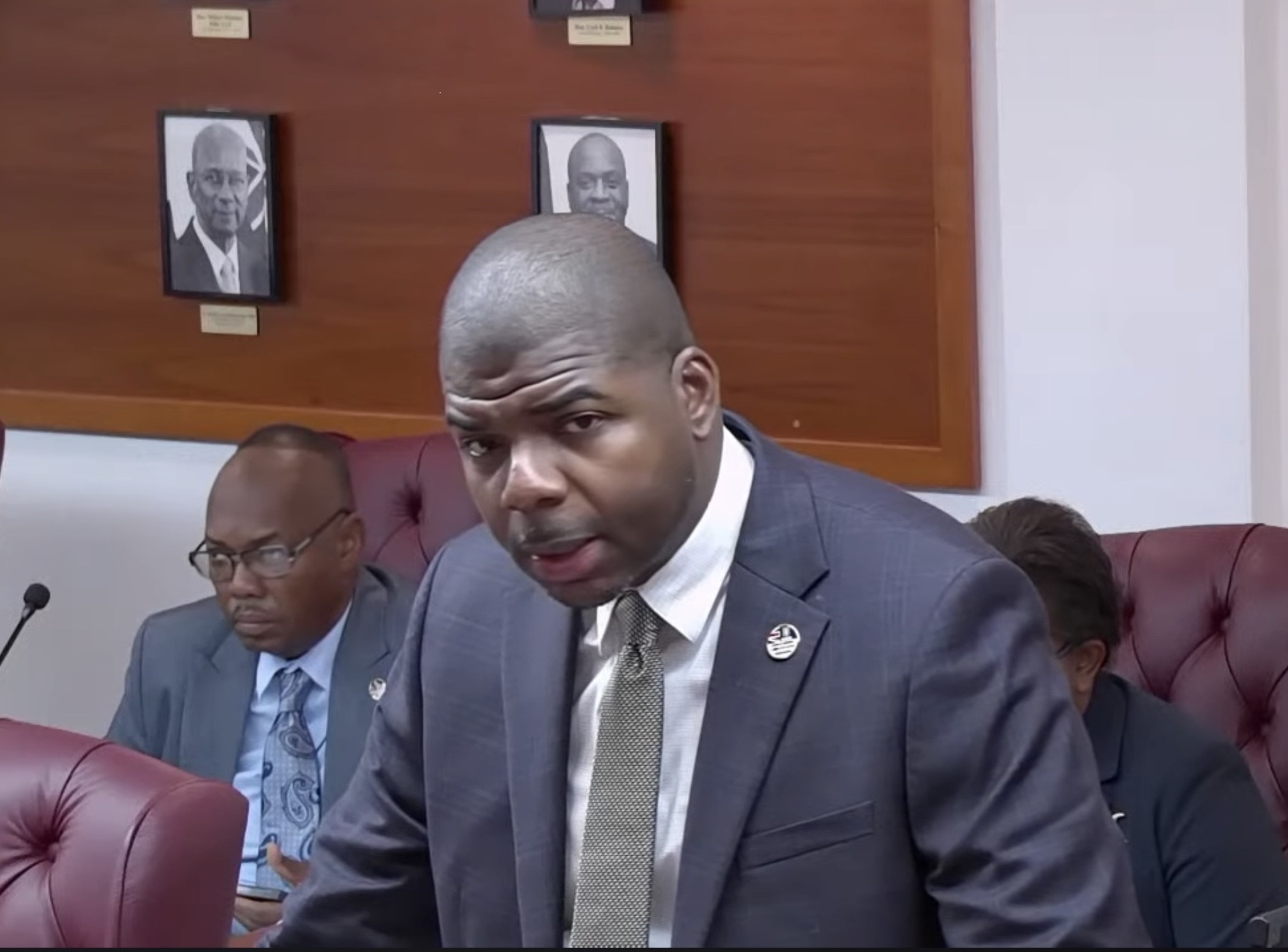

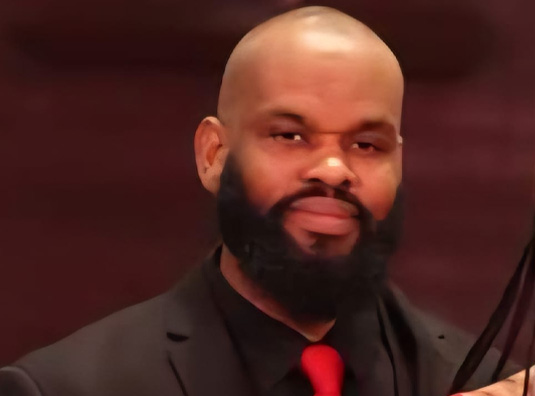
Walter Barrett, rehabilitation and restorative justice officer at His Majesty’s Prison, told the Virgin Islands Anti-Crime Summit 2025 on September 24 that many crimes are driven not by inherent malice but by personal crises and missed moral choices — and that restorative justice offers a proven way to break the cycle.
“There’s this simple equation I always talk about,” Barrett said. “Opportunity plus threat equals crime. Ninety percent of the crimes that take place don’t happen because people are inherently bad … but because a threat exists and an opportunity arises to deal with it — whether it’s starving children at home, pressure from a spouse, or losing a job and still having to pay the rent.”
Barrett during a panel discussion said understanding those pressures is essential if the Territory is to prevent crime and rehabilitate offenders. “Any one of us could be put in the position where we have to make that moral decision: do I or do I not? If we don’t have a moral compass that tells us to think about how our actions affect those around us, it becomes easier to commit a crime,” he said.
He highlighted the role of restorative justice — a practice that brings victims and offenders together to confront the human impact of crime and work toward meaningful repair. “You’re restoring justice by putting the power back into the hands of the person who has been offended,” Barrett explained. “Instead of simply penalising someone who committed a crime, you help them understand the harm they’ve caused.”
Barrett shared an example from His Majesty’s Prison: a young man who, with others, broke into a school and stole electronics, including a camera. During a restorative justice session, a teacher explained that while the stolen camera could be replaced, the memory card it contained held the only photograph of her, her terminally ill mother and her newborn baby. “When he heard that, it really affected him to the point where he started to cry,” Barrett said.
The teacher asked the young man to give back in a practical way: painting classrooms over the summer. When the work was done, the young man voluntarily painted the football field lines, swings and playground equipment. “For the first time, he felt how what he did was affecting other people,” Barrett said.
Barrett argued that such approaches can be more transformative than incarceration alone. “Restorative justice practices are crucial, and they work,” he said. “They are better than just penalising and incarcerating persons.”