

Politics
Premier moves motion to withdraw Police Act; Fraser seconds motion

(JTV News) — The controversial Police Act has finally been withdrawn.
In the House of Assembly, on Thursday, March 2, Premier Natalio Wheatley moved a motion to withdraw the bill, saying though attempts were made to modernise the bill along with public consultations, the people of the territory were not in favour of many of the revisions.
In withdrawing the bill, the Premier said there were some amendments made to it that were “troubling” to members of the public.
“It is my proposal to withdraw this bill today and to next week come back with a very small amendment to be passed which will accommodate for the DNA which is required and is vital to the work of the police,” Premier Wheatley said.
Opposition Leader and Third District Representative, Julian Fraser seconded the motion to withdraw the Police Act.
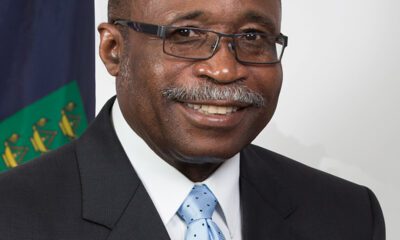








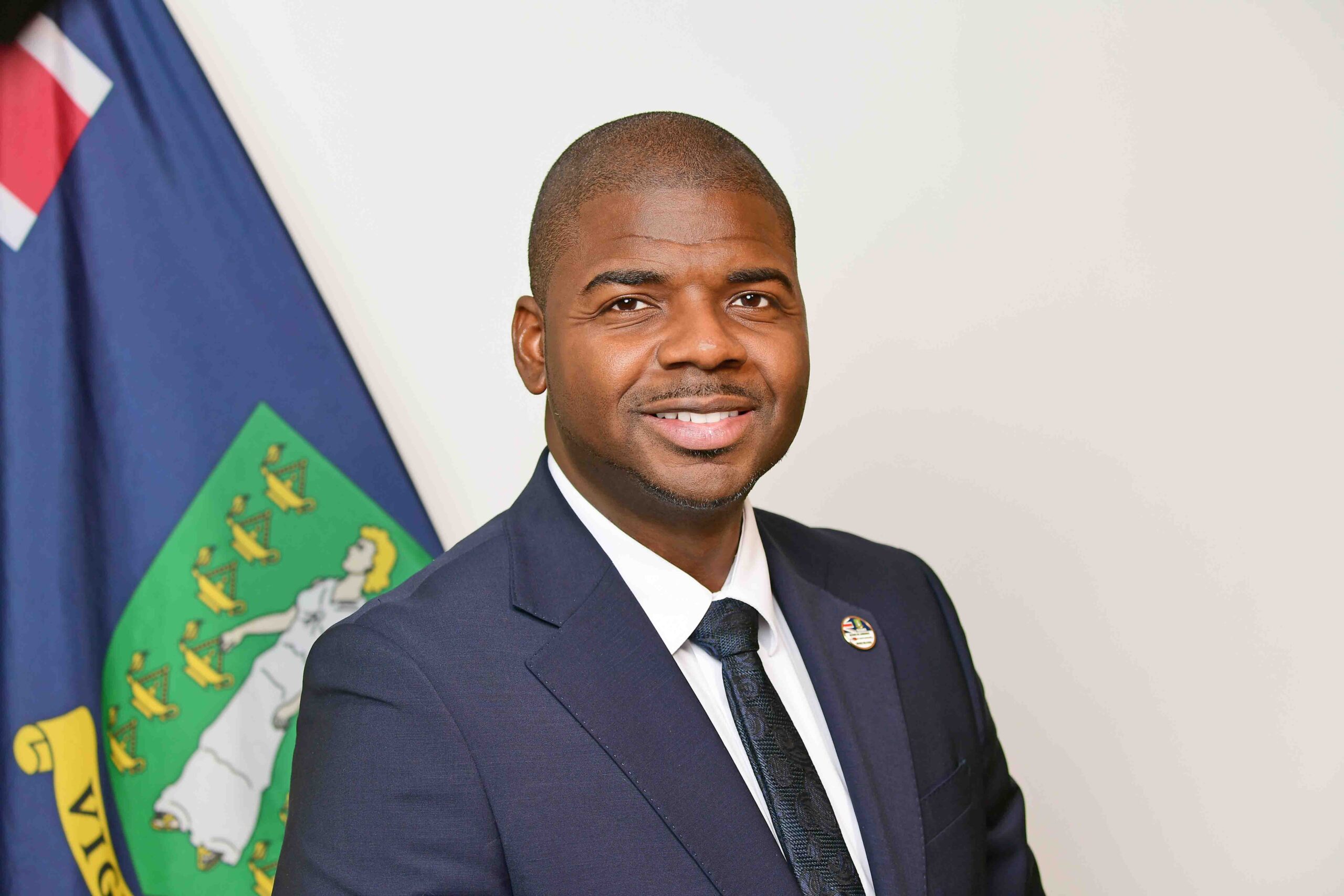
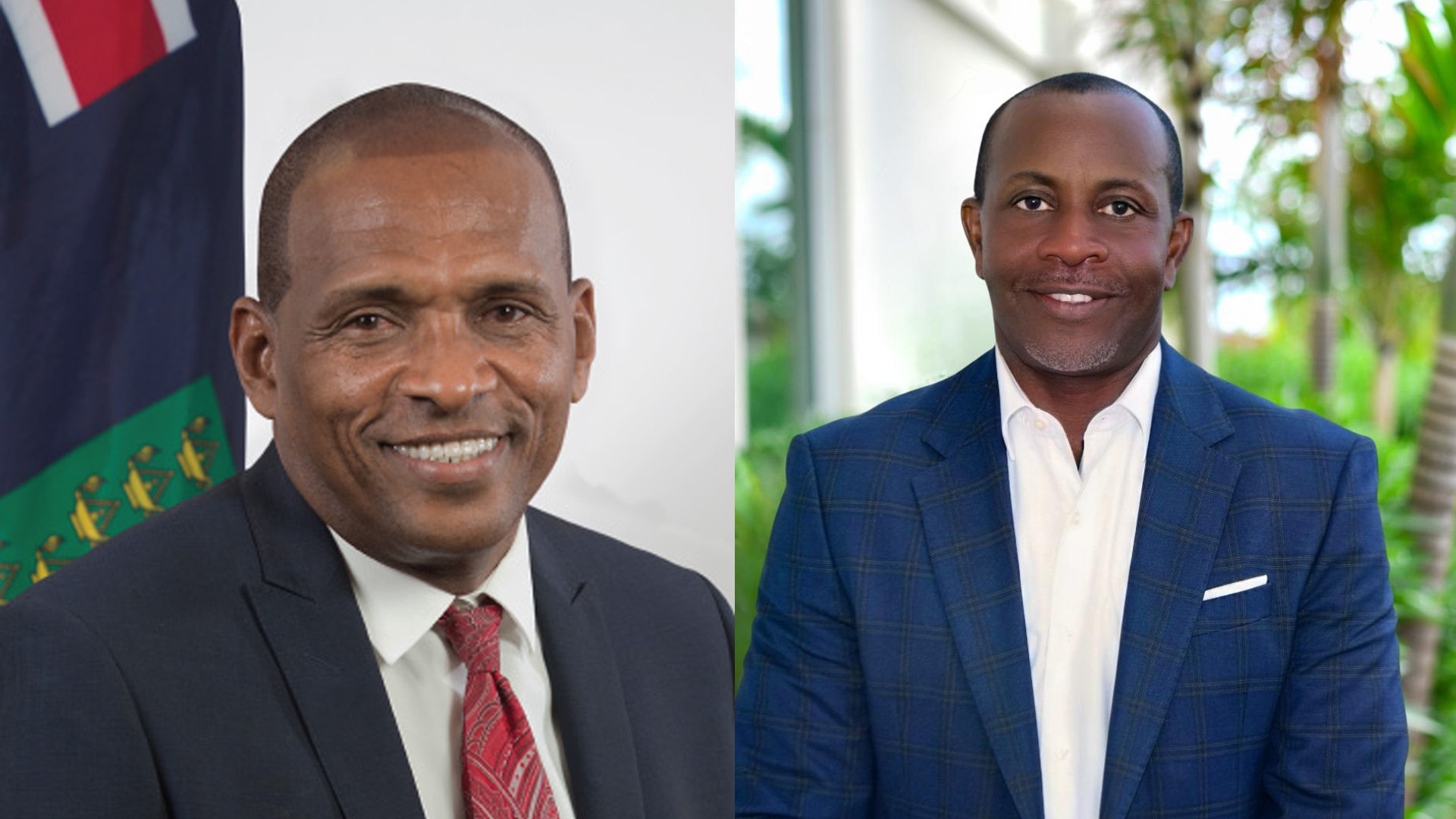
Vanterpool, in a letter dated April 9, raised concerns about whether delegates in districts 1, 5 and 7 were selected through properly convened district association meetings and whether the process complied with the party’s constitution. He also questioned the eligibility of certain participants and suggested delaying the finalization of the delegate list to allow additional meetings.
In response, Cline said the process followed the party’s constitutional framework, emphasizing that district associations — not candidates — are responsible for selecting delegates.
“To suggest there was something unfair at the convention level is irresponsible,” Cline said during a public address. “No candidate has any right to select delegates — that is the sole responsibility of the district associations.”
Cline confirmed that each district association is tasked with sending delegates to the convention and that candidates are required to campaign for those delegates’ votes once selected.
“You don’t get to pick who votes for you — that’s not how a democratic process works,” he said. “One hundred and twenty-one delegates made a decision, and that decision must be respected.”
The exchange between the two men followed a closely contested leadership election. Penn secured 65 votes to retain the chairmanship, while Vanterpool received 39 votes and Ronnie W. Skelton received 17. Turnbull was elected deputy chairman with 64 votes, defeating Myron V. Walwyn, who received 57.
Cline also addressed the concerns in a written response, stating that the NDP constitution establishes district associations as responsible for political organization at the district level and for putting forward delegates. He noted that while the constitution does not prescribe a specific meeting solely for delegate selection, it implies that such decisions should arise from properly convened association meetings.
“The preferred and constitutionally consistent approach is that delegates emerge from properly convened association processes,” Cline wrote.
He further clarified that membership in district associations is based on residency and that both association officers and delegates should come from within their respective districts.
Cline said the party’s executive committee has authority to ensure district associations remain functional and may facilitate meetings where necessary to maintain compliance with the constitution. He added that the concerns raised by Vanterpool were reviewed and that guidance was issued to relevant districts.
The matter gained public attention after both Vanterpool’s letter and Cline’s response were circulated.
Cline rejected suggestions that the dispute reflects broader instability within the party.
“The party is not breaking up — the core is strong,” he said. “This is not a game. The politics of this country is not a playground.”
The NDP has maintained that the convention was conducted in accordance with its constitution and that the outcome reflects the will of the delegates as the party prepares for the next general election.
ADVERTISEMENT:

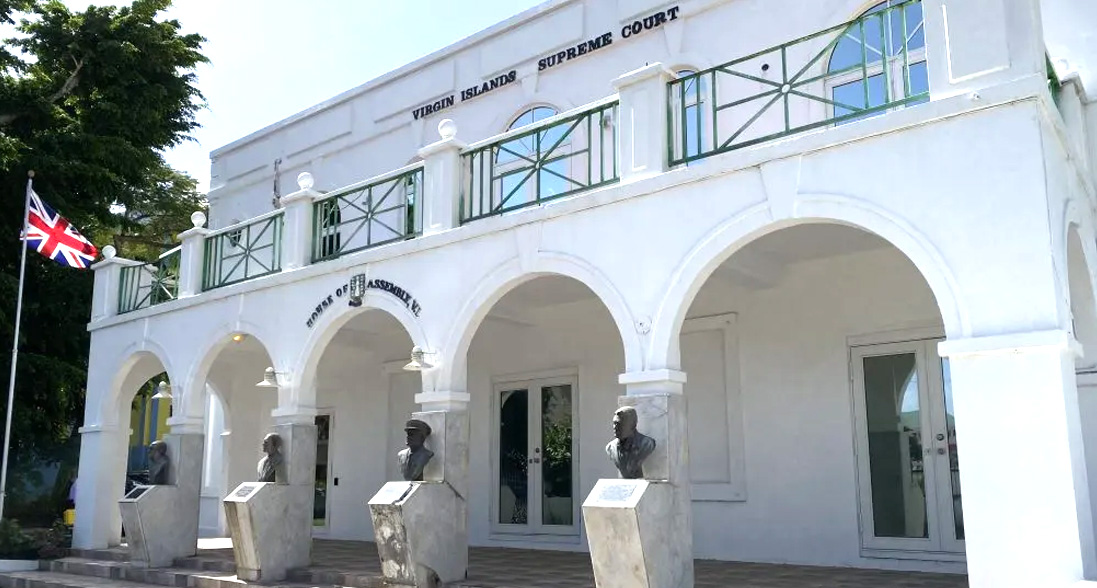
Concerns are being raised about how decisions are being made within the House of Assembly, with criticism focusing on the absence of data, limited public transparency and questions about whether sufficient expert guidance is being used in shaping national policies.
During the April 14 broadcast of Honestly Speaking on ZBVI Radio, host Claude Skelton Cline questioned the basis on which key national decisions are being taken, particularly in relation to ongoing constitutional discussions. “What measurements are being used?” he asked, pointing to what he described as a lack of data-driven decision-making.
The House of Assembly is the territory’s legislative body, responsible for making laws, approving budgets and overseeing government actions. It operates within the framework of the Virgin Islands Constitution Order, 2007, which outlines governance structures, including the role of elected members and the appointment of the Premier.
Skelton Cline said that while major policy decisions are being discussed, including constitutional reform, there is little public evidence that those decisions are being guided by comprehensive data such as census information or national assessments. “We don’t even know how many people are in the country,” he said, questioning how planning decisions can be made without current population data.
He also raised concerns about whether constitutional expertise is being sufficiently utilized. “Which constitutional lawyer… sat with you through this exercise?” he asked, referring to the ongoing review of governance structures.
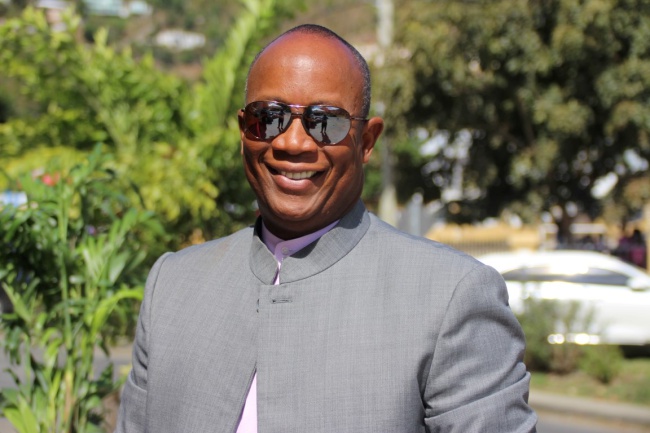
Claude Skelton Cline
Under the current system, the House of Assembly consists of 15 members, including 13 elected representatives, and serves as the primary law-making body in the territory. The body is also responsible for debating and shaping policies that affect national development, including constitutional reforms that may require approval from the United Kingdom.
Skelton Cline said decisions of this scale require a higher level of technical input and evidence-based planning, particularly given the long-term implications. He compared the process to making decisions without proper measurements, stating that policies should be informed by verifiable data rather than assumptions.
“Imagine… making decisions based on what you feel, what you think, what you’re guessing,” he said.
The comments come amid ongoing public discussion surrounding governance and constitutional reform in the Virgin Islands, including calls for greater accountability and transparency in decision-making. While the territory maintains internal self-governance, significant structural changes to its political system must align with the existing constitutional framework and, in some cases, receive approval from the United Kingdom.
Skelton Cline urged both officials and the public to seek clarity on how decisions are being made and what information is being used to support them, emphasizing the need for accountability in governance.
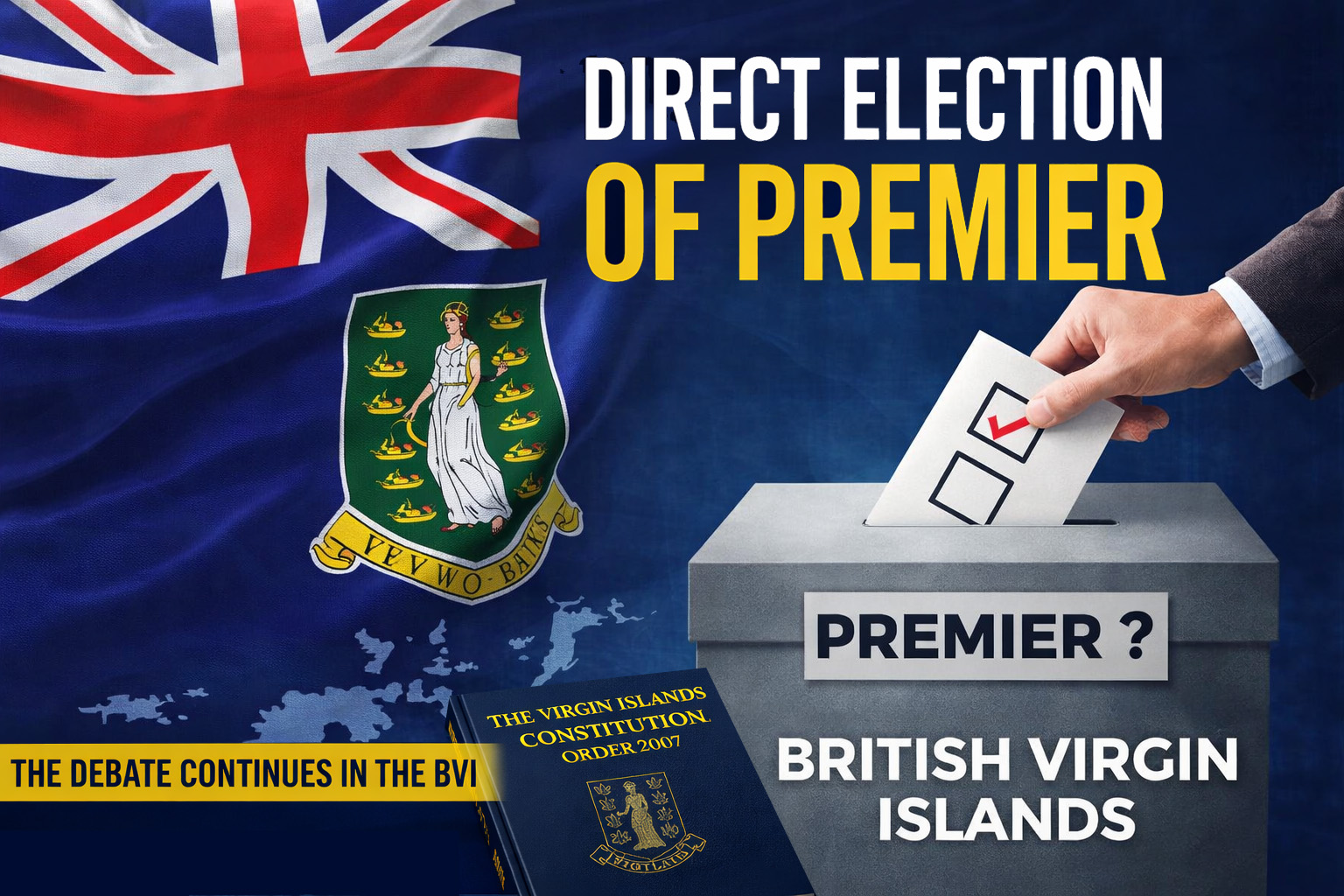
Growing public calls for the direct election of the Premier are highlighting tensions between voter expectations and the constitutional structure of governance in the Virgin Islands, where the head of government is not elected by popular vote but appointed through a parliamentary process.
Speaking on the April 14 broadcast of Honestly Speaking on ZBVI Radio, host Claude Skelton Cline pointed to increasing public support for selecting the Premier directly, describing it as part of a broader demand for political reform. “I am with the people of this country on matters such as voting for the Premier,” he said.
Under the current system, the Premier is not chosen by voters in a direct election. Instead, the Governor appoints the leader of the political party or coalition that commands a majority in the House of Assembly. This arrangement reflects the Virgin Islands’ parliamentary model, which is rooted in the British Westminster system.
Skelton Cline said many residents may not fully understand that implementing direct elections would require fundamental changes to that system. “Some of these changes that you are asking for will require a change in the very system in which our constitution is set down,” he said.
He added that such a shift would involve structural reforms beyond simple legislative amendments. “This requires structural and systemic change,” Skelton Cline said, noting that the current framework operates within constitutional limits that are influenced by the United Kingdom.
The Virgin Islands operates as a parliamentary democracy under the Virgin Islands Constitution Order, 2007, with executive authority formally vested in the British monarch and exercised locally through the Governor. While the territory has internal self-governance, significant constitutional changes require approval from the United Kingdom.
Debate over governance reforms has intensified in recent years, particularly following the work of the Constitutional Review Commission, which examined ways to modernize the territory’s political system and respond to public concerns about representation and accountability.
Skelton Cline said the current discussion reflects a broader desire among residents for greater involvement in leadership selection but warned that expectations must be aligned with legal and constitutional realities. “Why are you continuing to purchase a nine-inch shoe when your feet have grown to twelve?” he said, using an analogy to describe what he sees as a mismatch between public demands and the existing governance framework.
He urged government officials to provide clearer guidance to the public on what reforms are feasible and what steps would be required to achieve them. “Somebody needs to say to the people of this country… here is what needs to happen,” he said.
The issue is expected to remain central to ongoing constitutional discussions, as policymakers weigh public calls for reform against the legal and institutional structure that defines governance in the territory.
ADVERTISEMENT:

`You Don’t Get to Pick Who Votes for You’ — Cline Defends NDP Process as Constitutional

Tarik Aaron Arrested on USVI Extradition Warrant

Civil Registry Announces Increase in U.K. Passport Fees Effective April 8














-
 Crime/Police21 hours ago
Tarik Aaron Arrested on USVI Extradition Warrant
-

 Crime/Police6 days ago
Two Men Arrested in Free Bottom After Police Recover Modified Firearm, Drugs and Ammunition
-
 Elections 202323 hours ago
Hon. Wheatley Introduces Elections Amendment Bill in House of Assembly
-

 Entertainment2 weeks ago
Mystiq Flax Charles Wins Best Look of the Night at Style Week Event
-
 Local News22 hours ago
Civil Registry Announces Increase in U.K. Passport Fees Effective April 8
-

 Elections 20235 days ago
Walters Elected NDP Vice President as Party Finalizes Leadership Team
-

 Crime/Police1 week ago
Six New Police Vehicles Added to RVIPF Fleet to Strengthen Operations
-

 Entertainment2 weeks ago
Three Contestants Confirmed for Miss Elegantly Plus Caribbean Queen Pageant in Tortola