

Local News
Fuel Surcharge More Than Doubles in March as BVI Deploys $3M Electricity Subsidy

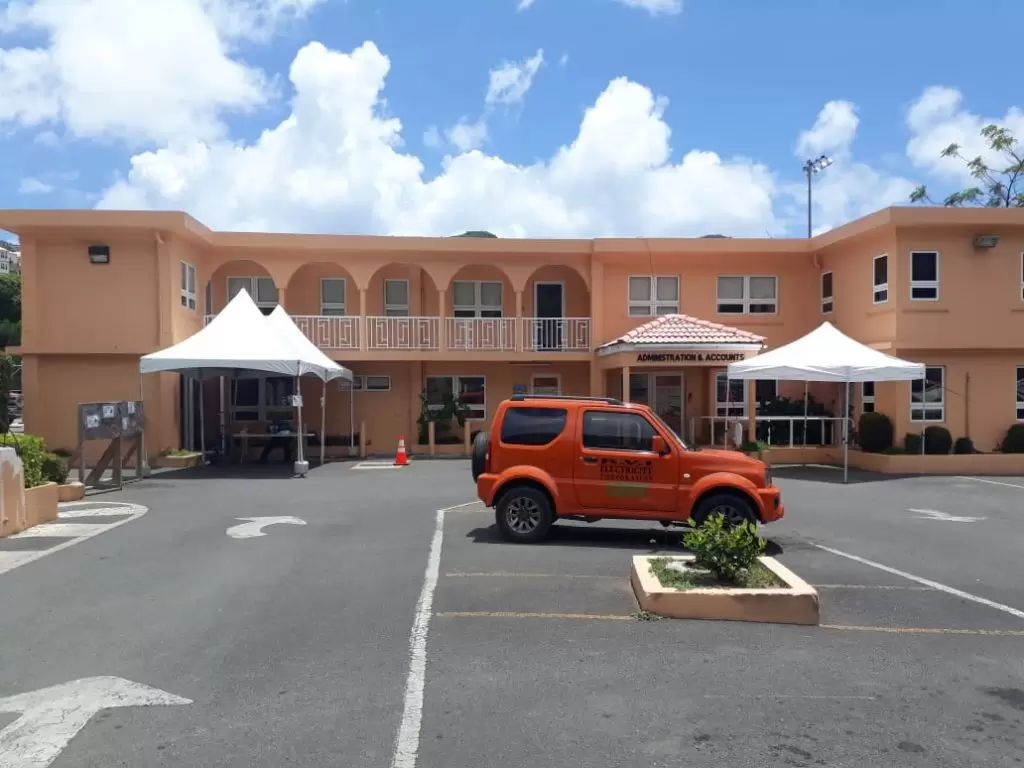
Residents across the British Virgin Islands took to social media this week to complain about sharply higher electricity bills, with some reporting that fuel surcharges exceeded the cost of their actual usage. The concerns surfaced on The Real BVI Community Board on Facebook, where multiple users described sudden increases in March bills and questioned how the charges had risen so quickly.
The British Virgin Islands Electricity Corporation (BVIEC), in its “Monthly Fuel Data – March 2026” report, confirmed that electricity fuel surcharges more than doubled in March amid a global surge in oil prices, while Honourable Dr. Natalio D. Wheatley and the Government of the Virgin Islands implemented a $3 million subsidy to ease the impact on consumers.
Data released by BVIEC shows the net fuel surcharge rose to $0.25381 per kilowatt-hour in March, compared with $0.11103 in February and $0.11630 in January. Officials attributed the increase to a spike in global fuel prices following disruptions to oil supply routes, including the Strait of Hormuz.
BVIEC’s total fuel cost for March reached $4,317,653, a 54 percent increase from February and the highest monthly fuel expenditure recorded in at least two years. Fuel consumption remained relatively stable at 1,256,304 gallons, indicating that the increase was driven by price rather than demand.
Public reaction to the increase was immediate. “My bill doubled. My fuel surcharge is $343! It’s more than my actual bill!!!!” one resident wrote under the post. Another commenter said, “Living on this island is becoming more and more impossible. It’s ridiculous having 2 adults at home that work all day and get a bill for $230.”
Others questioned inconsistencies in their bills. “My bill that had 221 kWh usage in February was cheaper than my bill that had 147 kWh usage last month,” one user stated, while another added, “Imagine not being on island for 18 days and your electricity bill remains the same as the previous month.”
BVIEC later responded under the same post, acknowledging the concerns and attributing the increase to global factors.
“You are right that the fuel surcharge increased significantly in March, and the reason is a global one,” the corporation stated. “The escalating conflict between the United States and Iran led to the closure of the Strait of Hormuz… causing fuel prices to surge to unprecedented levels in the BVI.”
According to BVIEC, the average fuel price rose to approximately $3.88 per gallon, representing a 55 percent increase in one month and exceeding the highest price recorded in 2025 by about 45 percent.
The corporation said that without intervention, the fuel surcharge would have reached $0.32135 per kilowatt-hour. BVIEC absorbed $2,644,955.84 in fuel subsidy costs during March, while the Government contributed an additional $1 million, bringing total relief to approximately $3.64 million.
Premier Honourable Dr. Natalio D. Wheatley had previously announced that the Government would allocate $3 million over three months, providing $1 million per month in subsidies.
“The General Manager informed me that without government intervention, customers would see increases on their electricity bills as high as fifty percent on average,” Premier Wheatley said.
Electricity demand in March declined to 15,064,889 kilowatt-hours, the lowest monthly level recorded so far in 2026, further indicating that the increase in costs was not driven by higher consumption.
The cost to produce and supply electricity rose to $0.23788 per kilowatt-hour, up from $0.20071 in February, reflecting the higher cost of fuel.
Officials said the subsidy program forms part of a broader response to rising living costs and noted that the Territory remains vulnerable to global energy market fluctuations due to its reliance on imported diesel fuel.
BVIEC and the Government are also encouraging residents to conserve energy and explore renewable options, including participation in the Solar Technology Energy Programme.
The three-month subsidy initiative remains in effect, though officials have not indicated whether additional measures will be introduced beyond that period.








A student of Elmore Stoutt High School on Tortola was reportedly rescued after attempting to jump from a school building while allegedly under the influence of substances prohibited in schools.
No further details have been officially released at this time.
ADVERTISEMENT:


The Virgin Islands will launch a Climate Change Trust Fund aimed at mobilizing international financing to support climate resilience initiatives and overcome barriers faced by Overseas Territories in accessing global climate funds.
The announcement was made on April 21 during a ministerial intervention at the Global Vision for Sustainable and Resilient Islands summit in Gran Canaria, Spain by Julian Fraser, Deputy Premier and Minister of Environment, Natural Resources and Climate Change.
The Trust Fund, which was scheduled to be formally launched later that day at the summit, is intended to provide sustained financial support for the territory’s climate agenda and is being positioned as a model for other small island economies.
“The Virgin Islands has set a bold vision for becoming the world’s first climate-smart island chain, but without breaking the barriers to accessing international climate finance… we can only have but so much wind in our sails,” Hon. Fraser said.
The initiative forms part of a broader strategy to strengthen financial and infrastructural resilience across the territory, which comprises more than 60 islands in the northeastern Caribbean.
Hon. Fraser outlined a framework built on five pillars: environmental protection, economic resilience, climate-resilient infrastructure, renewable energy, and community engagement.
Among the measures highlighted were a proposed Environment and Climate Change Bill, efforts to expand the blue economy, and the introduction of Disaster and Climate Risk Reduction Clinics to assist businesses in adapting to climate risks.
The government is also working to strengthen infrastructure standards based on lessons from the Hurricane Irma and Hurricane Maria, which caused extensive damage across the territory.
In the energy sector, the Virgin Islands is targeting 60 percent renewable energy by 2030. The island of Anegada has already transitioned largely to solar power, serving as an example of the territory’s renewable energy ambitions.
Hon. Fraser also said the government is exploring partnerships with financial institutions to provide low-interest financing to help residents and businesses invest in climate-resilient improvements.
He said the territory’s approach reflects a broader effort to align economic development with climate resilience in small island economies.

Fuel Surcharge More Than Doubles in March as BVI Deploys $3M Electricity Subsidy

FSC Regulators, TCP Sandflies Clinch Final Playoff Spots; Semifinals Set for Tonight

Student Rescued After Attempted Jump at School in Tortola














-

 Crime/Police1 week ago
Tarik Aaron Arrested on USVI Extradition Warrant
-

 Crime/Police2 weeks ago
Two Men Arrested in Free Bottom After Police Recover Modified Firearm, Drugs and Ammunition
-

 Elections 20231 week ago
Hon. Wheatley Introduces Elections Amendment Bill in House of Assembly
-

 Uncategorized3 days ago
Man Treated for Gunshot Wound as Police Investigate Vanterpool Estate Shooting
-

 Local News1 week ago
Civil Registry Announces Increase in U.K. Passport Fees Effective April 8
-

 Local News3 days ago
Virgin Islands to Launch Climate Change Trust Fund to Unlock Global Financing
-

 Elections 20231 week ago
Cline Names Pickering Among Leaders as NDP Looks Ahead to Elections
-

 Elections 20231 week ago
Vanterpool Distances Himself from NDP After Leadership Loss, Raises Concerns Over Process